Walk You to the Altar is a close-miked acoustic ballad about time, fatherhood, and the moment a promise comes due. Meaney & the Misfits keep the arrangement small so the lyric can do the heavy work.
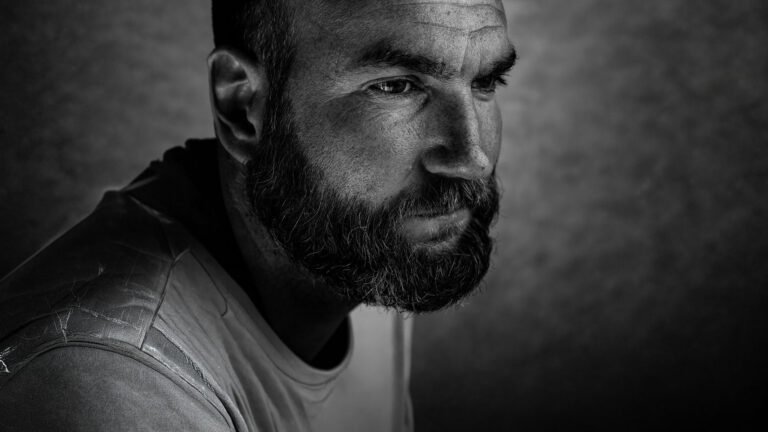
Pete Meaney writes from Plymouth, a city that has always known how to watch people leave. Under the name Meaney & the Misfits he has spent the last few years building a modest, stubborn catalogue of coastal folk and Americana from a shed at the bottom of the garden. The songs arrive without industry varnish. The Whiskey the Wine and the Songs That Make You Cry in 2020, All the Salt in the Sea a year later, then A Kind Hearted Woman, H.M.S. Whore, Two Bullets, and the 2023 album Cold Calling. In late August he put out Hook Line and Sinker. The through line is storytelling with grit in it, acoustic guitar close enough to hear the room, a voice that sounds lived in rather than styled. He is 6’8″. The recordings still feel small. That contrast is part of the identity. Walk You to the Altar is the most private song he has put his name to.
There is an old trick in English gardens that children learn before they have language for it. You pick a wall, a hedge, a shed. You hide. Someone covers their eyes and counts. The game only works if both people agree to disappear and to be found. Years later the same square of ground can hold a workbench, a microphone stand, a cable running back into the house. Meaney records in a shed at the bottom of the garden. The first image in Walk You to the Altar is a child hiding by that same kind of shed, sunlight cutting shadows off an oak. The studio and the hiding place occupy one plot. That is the song’s whole argument, folded into a place rather than announced as a theme. Time does not move on. It stacks.
The arrangement refuses to decorate that idea. Fingerpicked acoustic guitar turns in a tight circle for the length of the track. No drums step in to mark a chorus. No second guitar arrives to prove the song has grown up. The production is home work, close-miked on purpose, with the natural ring of a small room left in the signal. You hear breath. You hear the grain in the vocal. The melody sits near a lullaby, which would be a cheap move if the lyric were only sweet. It is not. Meaney sings as if he is talking across a table after the guests have gone. The intensity does not come from volume. It comes from the way each verse adds another year the singer can no longer hold.
“Ready or not” is the hinge. Hide-and-seek language becomes a clock. First it is a child in the garden. Then it is babies arriving one by one, a daughter with her mother’s eyes, a vow made when a life had only just begun. Teach you to walk before you run. Then the aisle. The refrain that once meant I am coming to find you now means I am walking you toward someone else. The cruelest line is also the calmest. He lost her when he gave her to another. That is the parental paradox stated without sermon. Love does the work of protection so that love can do the work of release. The altar is not a twist. It is the place the counting was always heading.
Fatherhood songs of this kind often collapse into greeting-card weather. Meaney stays on the right side of that drop because he lets the tenderness carry its cost. Time plays games with all of us, he sings, and the line is not philosophy. It is the feeling of arriving late to a moment you were standing inside. Laughter and silence sit in the same bar. A whispered prayer. At the end the daughter wipes his tears with small hands, which reverses the care without turning the scene into theatre. He keeps the promise. He walks her there. The guitar does not swell to congratulate him.
What gives the single weight is the match between method and subject. A song about watching someone grow does not need an orchestra to prove the years have passed. It needs a pattern that can repeat without going numb, and a singer willing to stay at the same dynamic while the meaning darkens. That is what the shed recording buys him. The room is unchanged. The person in it is not. Plymouth sits behind the track as weather more than postcard, a coastal light, a habit of looking out and letting the horizon take what it takes. Meaney has said he wanted to write about the passage of time and watching people grow. He did that. He also wrote about the last useful thing a parent can do, which is to show up on time for a ceremony that ends their old job.
Walk You to the Altar will not rearrange the map of British folk. It does not try to. It earns attention through pacing, detail, and a lyric that knows the difference between memory and souvenir. The childhood game ends when someone is found. This song ends when someone is given away. Same count. Different stakes. That is why the smallness of the recording matters. You are close enough to hear him finish the walk.
Follow Meaney & the Misfits
Walk You to the Altar is out now.
Join the Club
Like this story? You’ll love our monthly newsletter.
Thank you for subscribing to the newsletter.
Oops. Something went wrong. Please try again later.

ROMBO Editorial Staff
The collective voice behind ROMBO Magazine’s news, reviews, features, and cultural coverage.