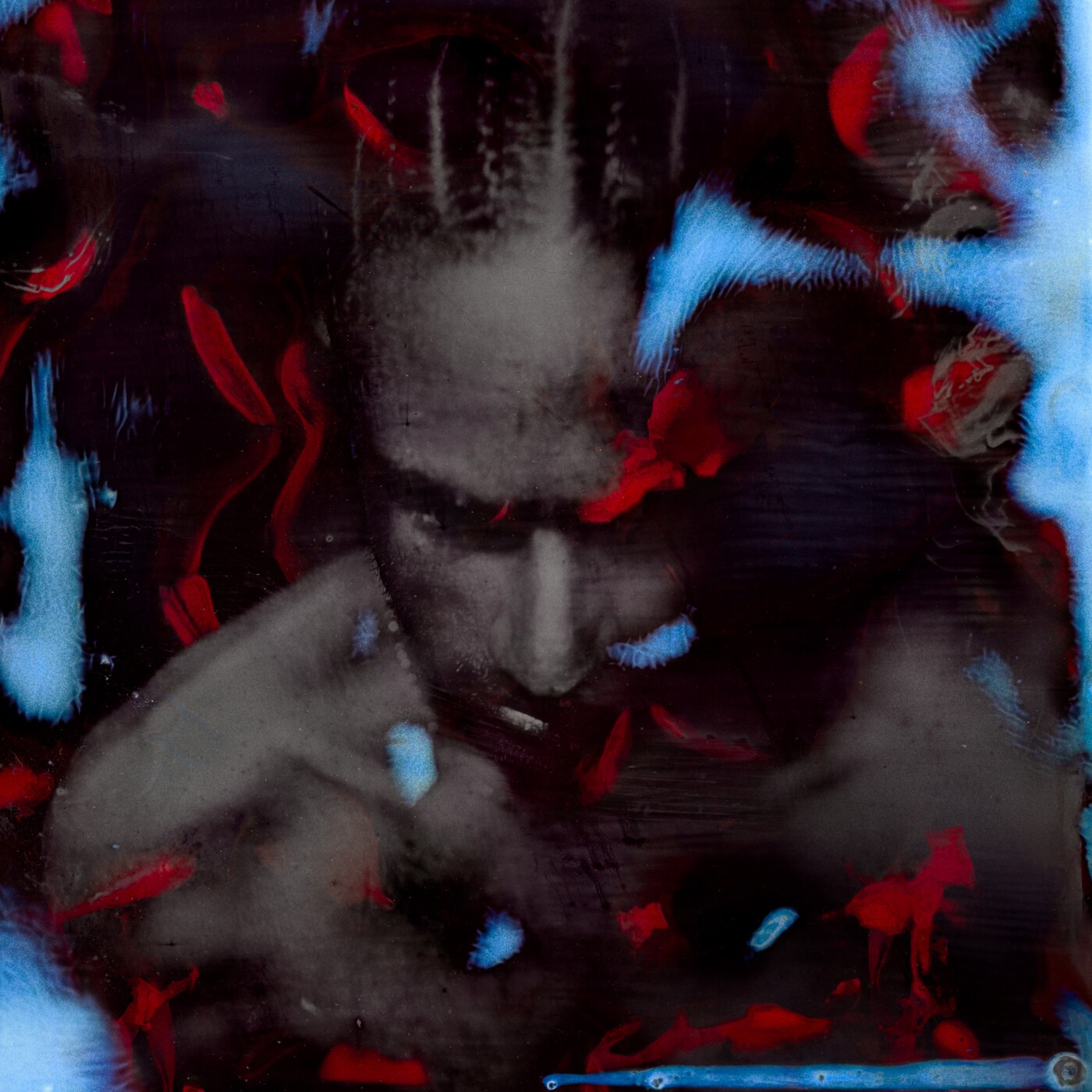
A dry stone waller reads a pile of stones the way a jeweller reads a tray of uncut gems. Each stone has one face that wants to show, one long edge that wants to sit into the wall, one rough back that wants the dark. There is no mortar, nothing sticky holding the wall together. The waller taps a stone with a small hammer, feels the dull knock travel through the layers, and sets the next stone so its weight leans into its neighbour. Rain runs through the gaps, frost heaves the ground, yet a good wall stands for two centuries, breathing from one side to the other. I think about that craft whenever I hear music that treats sound as a material to be fitted with the same patience. The click of stone on stone is a kind of percussion, and the wall's patience is a kind of timekeeping.
Ian Mugerwa, who records as Dawuna, knows about fitting small, rough pieces together. He left Uganda as a child for the Maryland suburbs, spent years in Brooklyn, moved to Baltimore roughly three years before this album, and a car crash caused a traumatic brain injury that kept him from writing for twelve months. Love's Arp, his fourth full-length, is out now on True Panther Records, and he frames the album as a future-soul map carrying what he terms diasporic twists, with domestic foley, plucked lamellophone patterns, gospel melisma, and lo-fi funk placed side by side with a waller's calm. The album concerns his romance with a woman named Love, but the word stretches far beyond one person. My verdict early: this is a remarkable, transporting record, more deliberate than anything Mugerwa has made, and it holds the listener the way a dry stone wall holds a field, by friction and weight.
The record also feels like an answer to silence. After the car crash caused a traumatic brain injury that kept him from writing for twelve months, Love's Arp arrives with the patience of a waller returning to a half-built wall, fitting one sound against the next. Across the album, a close-miked world of clinking dishes, crisp handclaps, plucked lamellophones, and rubbery basslines sits right against the ear, while detuned synthesizers, wordless harmonies, and cavernous reverb drift overhead. That tension between dry tactility and weightless haze is the album's real subject, and it maps a diasporic intimacy where the domestic room and the spiritual void share the same breath. I keep coming back to the way Mugerwa lets the two layers argue without resolving them: the kitchen sounds of Love and the churchly sighs of Be Careful I belong to the same house.
The dry tactility of the record is strongest when a woody thumb-piano figure in Love's Ekongo meets dry handclaps. A fragile falsetto confesses, "How I sing, how I bleed," then grounds itself: "Both come from the same place." The song doubles the voice across registers on the line about not being able to talk about it when inside that thing, and the claustrophobia feels earned. That same mix of compulsion and dark comedy carries into Love Wants a Family, where a dog chasing a car gets hit and a mouse trips a trap over a shuffling rimshot loop. Love Jaunt flips the mood to staccato devotion, the singer promising to travel any distance, and True earns its heavier beat only after the word scraping by, admitting vulnerability like a wall that leans but stands.
The album's most charming pivot comes in Wet Sheets / Lip Gloss, a dry handclap groove and bright synth arpeggio under lyrics that celebrate "Old muumuu, got no panties," dirty socks, and body candy. The lead falsetto alternates with multi-tracked harmonies, and the whole thing smells like a bedroom on a Sunday morning. A similar domestic ease spills into Your Light, where the singer asks to take light and share it, to "Let's forgo that fight, baby," and the cavernous reverb turns the plea into a shared sigh. Love for Sly and Brian uses busy polyrhythmic hand drums and a clipped request to read my mind.
The two sound-collage pieces, Love and the wordless-vocal God's Love, feel more like foyers than rooms you live in, but they prepare the ear for the sharper writing around them. I keep going back to the dry handclaps and thumb-piano loop in Love's Ekongo, and to the heavy reverb in Your Light that makes the space cavernous.
If you love the humid quiet of Frank Ocean's Blonde, the thumb-piano soul of Kelela's more recent work, or the devotional patience of D'Angelo's Voodoo, Love's Arp will find you. This is music for late nights in a dim kitchen while dishes dry on the rack, for a long drive through suburban sprawl past midnight, for the hour after an argument when no one wants to speak first. Start with Wet Sheets / Lip Gloss and Love's Ekongo, the record's two poles of comfort and pressure, then let Your Light settle the room. Anyone needing hooks, immediate energy, or a clear narrative should leave this one alone; it asks for the same patience a waller gives a stone, and it rewards only the listener who stops moving.
A waller leaves the memory of each stone's weight against its neighbour. Love's Arp fits sound that way: every handclap, thumb-piano pluck, and wet reverb holds the next one up. The wall stands in the dark, breathing through its gaps, and I keep listening for the click.