
Lada Blank released her debut EP Therapy in October. She writes all the lyrics and all the music herself. Prior to going fully into songwriting she worked in marketing, studied psychology and had a stint at publishing short fiction with the big Russian houses. She's still writing a novel. The literary instinct is very much there. She constructs her songs as rooms which open onto one another.
In the old art of the memory palace you'd store the facts in the chambers of your mind and then walk back through them. Blank does it the other way around. She builds the chambers from the facts of feeling and then has the voice go in and inhabit each one before the door can close. The EP is the walk.

The piano is in every room. In Emptiness it's quite dark and measured, the chords coming in quite spaced so that the reverb can fill the spaces. There's a very ethereal vocalise on top of that. The snare comes in on the second verse and that sets the march. Half way through the track the second chorus comes in and completely opens up the space: massive kick, round bass and saturated electric guitars all coming in, the voice soaring into a wide vibrato with doubles. Then it's all cleared again, the piano left standing alone before one final swell. The lyric is constantly coming back to the same thing: “Emptiness / Get out of my breast / Bring me to life / I’ll win the fight". The sound does that very effectively. It fills the room and then clears it so the fight can go on.
Mountain river opens with the real sound of water against a high, clean piano arpeggio. Strings come in and build the atmosphere. Layered vocals come in, climbing both in register and in density. In the middle of the piece the drums enter with a very slow, deep snare and it becomes a rather solemn march. The final minute strips it right back down to piano, voice and the water. The words turn at the same point as the arrangement does. Right at the beginning the singer is asking the river to “Take me out of my shuttered cave” and “Teach me not escape but freedom". Later on she turns down the offer: “Mountain river / Don’t take me away / If you take me / You’ll make me a slave". The river stays outside. The strength stays in.
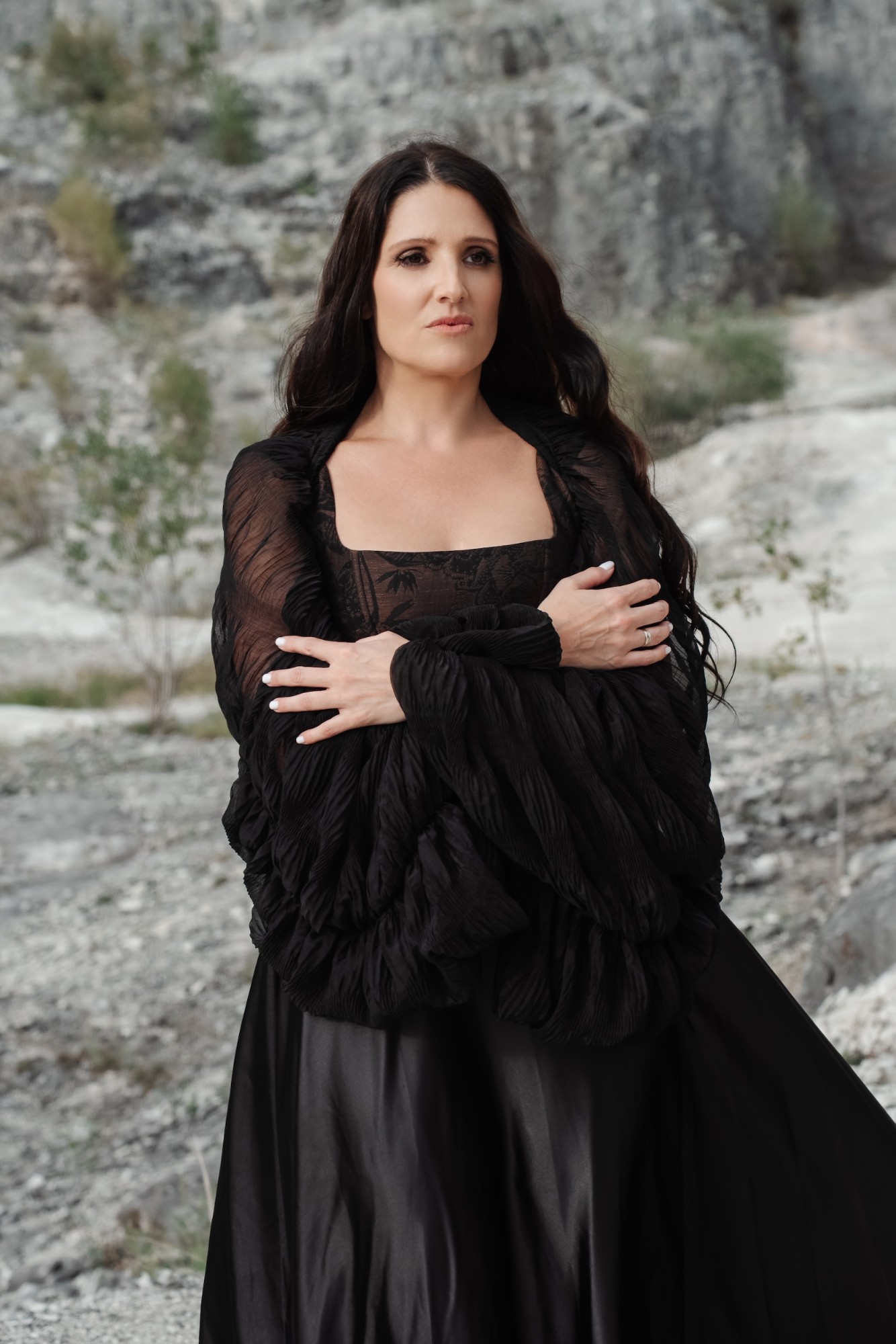
Blueberry eyes move in a very slow three quarter waltz. Piano and voice start off all on their own, the phrasing very precise and well held. The first chorus comes in with snare, bass and full broad strings filling out the arrangement, the voice doubling and moving up into the upper middle register. The image is very clear: “You’re sitting at a bar with your new flame” and the eyes which "were sweet like a berry jam jar / and now sour, slowly rotten". By the end the same eyes "still are mine / and they are learning how to shine". The waltz never really loses its step, it just opens up and closes the room around it.
Toxic mother kicks off with a descending chromatic piano line under a low pulse. The voice comes in over a dense, dark string section. The choruses come in with a very martial weight and then the whole thing drops away for a spoken section over the sustained strings. Half way through there's a low piano chord that interrupts the spoken section and then opens up a much brighter progression of piano and strings. The voice goes up into the upper register and rides the full orchestral swell. That's where the lyric is at its clearest: "Thank you for not loving me / I’d have vanished in your love / But I had to find it within" and then “I’ll break the cycle / It ends with me / For my children and for myself.” The spoken bits keep the theatricality very much in play. The final lift just leaves the decision hanging in the air.
The Therapy track finishes the sequence as a staged dialogue between a narrator, a client and a therapist. The client asks to be parented. The therapist turns it down and points back to what's already there. The final spoken lines leave you with the same instruction that the earlier tracks have already been demonstrating in the sound itself: the gentle touch has to come from within the room.

Right across the EP the production maintains the same spatial character. It starts off quite sparse, builds out into quite dense orchestral and rock textures and then empties again. The reverb is wide but very controlled. The vocal delivery goes from very intimate, syllabic in the lower middle register to full, richly vibratoed in the choruses (often doubled to add to the emotional warmth). It's a very theatrical sound because the dynamics are theatrical. You're building a room, you're letting the voice inhabit it and then you leave enough space for the next door to open.
If Regina Spektor's exacting phrase work on the piano, the dramatic crescendos of Florence + The Machine or the gothic piano and strings of Evanescence are already part of your playlist then Therapy is the kind of music that rewards the same kind of attention. It's music for a quiet evening in your headphones, the kind of music you listen to when you're in the mood to walk through the rooms rather than just skip past them. The EP treats atmosphere as structure. It's the precision with which each room is constructed and then stripped away that gives it the heft.