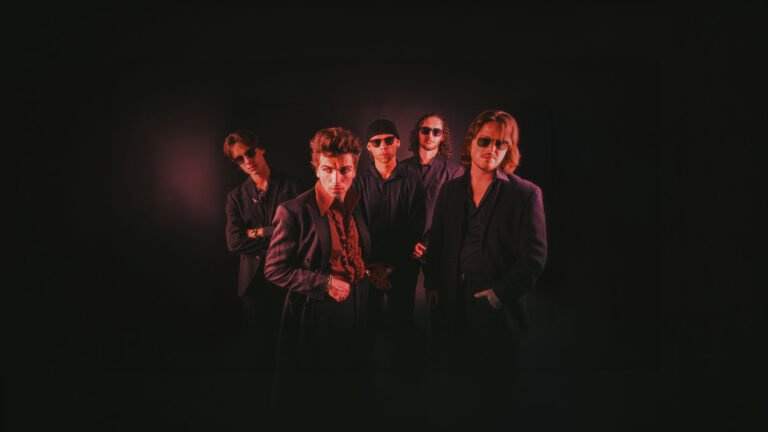
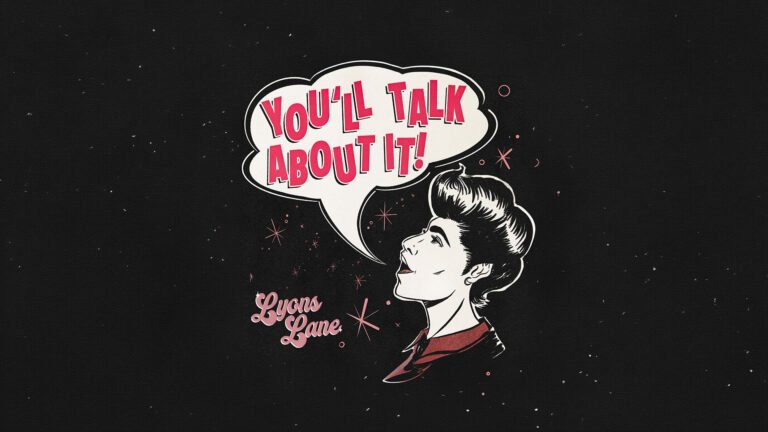
On You’ll Talk About It!, Lyons Lane builds a six-song argument between swagger and the wish to disappear.
Detroit five-piece Lyons Lane is out now with You’ll Talk About It!, a debut EP that already had a life before it had a street date. The band grew out of songwriter and frontman Mark Leo and bassist Thomas “Tomcat” Thompson, who met in high school over rockabilly and doo-wop and spent early years playing long dive-bar sets built from 1950s covers. Guitarist Darrian Loehne, tenor saxophonist Matthew Stevens and drummer Shane Wheeler completed the current lineup, and the sound thickened into something horn-led, theatrical and built for a room. Their cover of “Love Potion No. 9” did the unfashionable thing and travelled. Clips split audiences in half, one side hearing a new band, the other hearing The Clovers through a modern filter, and the cheap comparison that followed was Arctic Monkeys. A full set makes that label feel thin. The group sold out The Magic Bag in Ferndale on 11 April, recorded the EP at Rustbelt Studios in Royal Oak with producer Jake Halkey, and kept putting singles out while the larger record was still being shaped. Emma’s Addiction already had an official video. Honeydripper, Femme Fatale and Stoplight Kissing had already sketched the posture. The EP is the first time the posture has to last six songs.
Here is the thought that will not leave the record alone. In May 1960, The Twilight Zone aired “A Stop at Willoughby.” Rod Serling liked it enough to call it his favourite story from the first season. Gart Williams is an advertising man whose armour, Serling says, is held together by one bolt. He rides a commuter train until the carriage changes century and the platform reads Willoughby, July 1888, a town that looks like rest. Track four on this EP takes that title on purpose. Lyons Lane is a vintage band by costume and by brass, which makes the reference look like set dressing. It is not. The whole record is a commuter arguing with himself about whether to stay on the train of talk, appetite and performance, or to get off.
Don’t Shoot the Messenger opens the doors before anyone has sat down. A slapped bass line and a dry drum groove set the temperature, then the horns arrive and the chorus becomes a plea dressed as a joke. The narrator slept with someone already spoken for, swears he did not know, and still makes the call. “She kept you a secret” is the alibi and the punchline. Leo sings it with theatre in the grain, half confession, half vaudeville, and the band gives him a funk-rock chassis that wants the head to move before the moral lands. The last wink, “Look how the Leo is back, baby,” is the frontman putting his own name in the gossip. That is the EP’s first contract. Charm will do some of the work. The rest will have to be paid later.

Taishan Pearls keeps the engine running and tightens the character. The bass stays busy, the guitars stay sharp, and the chorus opens like a song written to be shouted from a low stage. Everybody is talking about his line. Women accuse him of playing the game like Monopoly. He answers that he would rather die than settle, then admits he is never satisfied. The arrogance is the costume. The dissatisfaction is the fit. The writing is pop-smart under the attitude, verses almost spoken, the bridge asking why she will not believe in him before the refrain sends the critics to the back of the line.
Then the temperature drops. Bitten is the first time the record lets the voice get close to the microphone. Arpeggiated guitar, more air, a slower pulse. The man who would rather die than settle is now changing the way he dresses for someone who will not look back. “Why am I so bitten by you?” is not a clever line. It is the bolt coming loose. The arrangement grows in layers instead of jumps, and the EP earns a different kind of attention here, the kind that does not need a horn stab to hold a room.
A Stop at Willoughby puts the distortion back on and aims the chorus at an open window. The lyric keeps packing a bag and unpacking it. He would give anything to leave this life. He would give anything to see her stay. Distance becomes a kind of closeness he can manage, “the further that you are, the closer I keep you in my heart,” and the ending thins toward piano as if the anthem remembered the platform. Serling’s commuter jumped and found a funeral home with the same name as the town. Lyons Lane lets the character wait with open arms instead. That choice is the record’s mercy, and also its hesitation.
Emma’s Addiction is the title track in all but name. Already released as a single, it turns rumour into a chant. Emma has a lover, falls for a kiss, calls the damage a habit, and talks. The band answers with a circular guitar figure and a bass line that refuses to sit down. “She’ll talk about it” becomes “you’ll talk about it,” and the EP finally says its own name out loud. The narrator claims he owes her nothing because she saw him in a dream. It is cruel on the page and catchy in the air, which is the point. Gossip is the extra instrument. The chorus is built so a crowd can take the extra part.
Sugar & Spices closes at a boarding station. Fingers crossed she crosses the sea. He brings vices, she brings the sweetness he cannot hold without bruising it. The melody is open, almost choral, and the last door is left unlocked. If on the journey she decides he was the one, they can be reunited. After five songs of alibi, appetite and talk, the EP ends on a wish instead of a verdict. That is a mature exit for a debut this eager to be seen.
What gives You’ll Talk About It! weight is the control of that swing. Lyons Lane knows how to look like a 1950s picture and still write like a band that has spent time on Instagram comment threads. The vintage is costume and method, not a museum. Rockabilly, doo-wop and mid-century American pop sit under indie-rock and pop-punk choruses, and Matthew Stevens’ saxophone keeps the arrangements from flattening into revival. The record can be danced to. It can also be read as a short novel about a man who enjoys being discussed until discussion becomes the only room he lives in. Detroit has heard versions of this swagger before. Few local debuts have staged it with this much wit, this much brass, and this clear a wish to step onto a quieter platform without losing the plot. The town will talk. The songs already know that. They just refuse to let the talk have the last tempo.
Follow Lyons Lane
You’ll Talk About It! is out now.
Listen: Spotify · SoundCloud
Follow: Instagram · YouTube · TikTok · Facebook · Official Site · Songkick