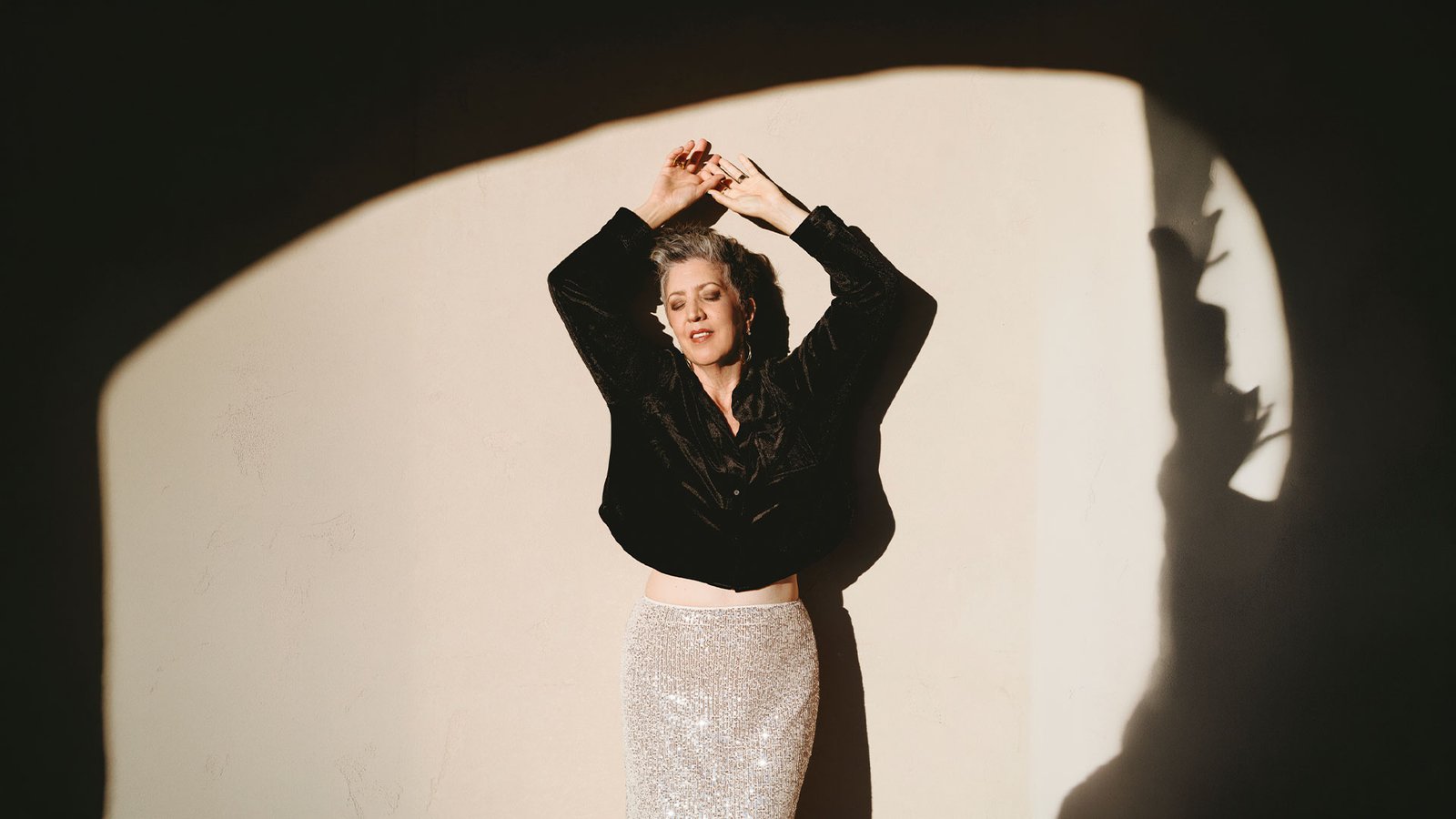
Patti Zlaket has moved for years between stages and courtrooms. She released records, toured, wrote songs, then stepped away from the studio for a long period while continuing to perform live. When she returned with Dance Again, produced by Tariqh Akoni and featuring Lee Sklar on bass, it did not arrive as a nostalgic comeback. It arrived as the work of someone who has made a clear choice: to keep making music from a place of calm usefulness rather than from any need to prove anything.
The opening track sets the tone with quiet insistence. The rhythm moves forward while Zlaket sings about the feeling of trying to slow time down and realising that the more she pulls on the hands of the clock, the less certain she becomes. There is no attempt to outrun the discomfort. The song simply stays inside it. This decision — to stay with the feeling instead of trying to escape it — runs through the entire album. Dance Again accepts that time keeps moving and asks what can still be done inside that movement.
That same clear attention runs through the title track. The question at its centre is simple and exposed: do you want to dance again, even though you already know you might fall? Zlaket does not answer with false certainty. She holds the doubt and the possibility side by side. Her voice carries both the memory of previous falls and the refusal to let that memory become a reason to stop. It is music made by someone who has chosen to keep moving without needing guarantees.
One of the most consistent qualities of the album is how often the songs turn outward. In “I’ve Got You” Zlaket offers herself as a steady presence for a sister who is struggling and for a friend the world keeps trying to wear down. The song does not pretend to solve anything. It simply states a willingness to stay close when things feel heavy. “Love Is for You” makes a similar gesture on a wider scale. It speaks to anyone who has already been hurt and who still finds themselves willing to risk connection again. These moments are not side stories. They form the emotional centre of the record. Zlaket seems less interested in telling her own story of return than in asking what she can still give to other people.
The production supports this feeling of deliberate calm. The piano stays at the centre, warm and unhurried. Lee Sklar’s bass provides a steady, grounding pulse without ever drawing attention to itself. The arrangements are spacious enough for the words to land and for the voice to breathe. Nothing feels decorative. Everything feels like it is there to serve the emotional temperature of the song. Zlaket sings with the particular clarity of someone who no longer feels the need to perform urgency. She sings like someone who has chosen to be steady.
“Let’s Move On” handles the end of something with a directness that feels earned. Zlaket has reached the point where continuing to pretend has become more exhausting than facing what is already true. There is no bitterness in the delivery, only recognition. The song understands that sometimes the most honest thing you can do is stop forcing a story that no longer fits. It sits in quiet contrast to the title track: where “Dance Again” weighs the risk of starting over, this song weighs the cost of staying when the truth has already arrived.
“Someone to Lay Down Beside Me” names a different kind of need. It is not about passion that erases difficulty. It is about the simpler, harder desire for real company when the world shows its ordinary indifference. The song does not ask to be rescued from time or from loneliness. It asks for presence. In a record that keeps returning to the movement of time, this track identifies one of the things that makes the remaining time feel more bearable: the knowledge that someone will stay in the room when the lights go off.
“Second Chance at Love” is the most surprising and moving song on the album. Written from the perspective of a rescue dog, it becomes a quiet statement about still having something to offer after difficult experiences. The repeated line “I’ve still got somethin’ / and it’s all for you” lands with force because it refuses self-pity. The song does not ask for sympathy. It offers companionship. It suggests that the capacity to give care does not disappear simply because life has been hard or because time has passed.
What holds Dance Again together is a consistent quality of attention. The songs accept that time keeps moving and that things can fall apart. Zlaket does not treat this as a reason to withdraw. She treats it as the condition under which connection and care must still happen. The music stays close to that reality without trying to turn it into something more triumphant or more comforting. It is an album that values steadiness over spectacle, and presence over any attempt to outrun time.
This is the particular weight of the record. It does not ask the listener to believe that everything will work out in the end. It asks something quieter and more useful: to keep showing up anyway, with whatever voice and whatever understanding you have now. In a time when many artists feel the pressure to perform reinvention or urgency, Dance Again offers something rarer: the sound of someone who has chosen clarity, and who has decided there is still work worth doing.