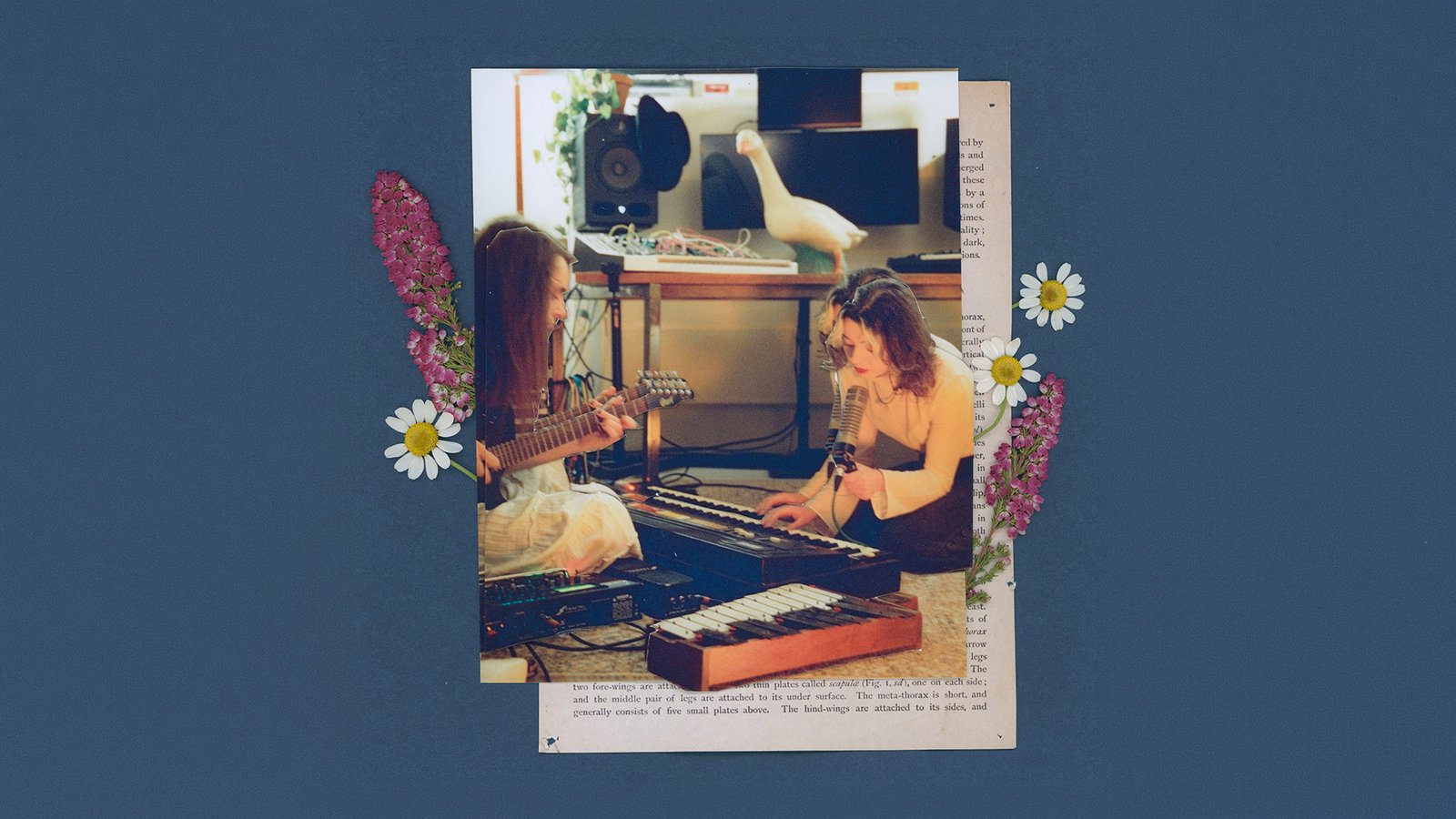
Stage Door Guy started as a meeting, not a plan. Adam Brody, a spoken word artist from Manchester, tells it as an Ash Wednesday in New Orleans, alone in the gutter, pulled upright by guitarist CJ Williams, a whiskey, and a blues riff. That night they wrote 9th Ward Marching Band. The song became the first thing they had in common, and their first gig was at Buffas Lounge. Brody brought the punk talk and the Manchester mouth. Williams brought the Crescent City guitar. By 2017 they had a self-released debut, A Day in the Death of. John Robb, writing in Louder Than War, heard a later track, Bullyboy, as a quirky off-kilter slice of snarky swing with a rocking core, Manchester via New Orleans. The map they draw for themselves runs from John Cooper Clarke and The Fall to Professor Longhair and Dead Kennedys. London rooms such as the New Cross Inn and the Dublin Castle came later. So did bills with Gemma Rogers and LA Salami. The accent of the project stayed split.
In a theatre, the stage door is not the public entrance. It is the side door, the one the cast use when the bow is over and the coat goes back on. Programmes get signed there. Strangers wait on the pavement for a look at the person who has just stopped being the part. The job, if you take the band name literally, is to decide who crosses. Keep It In The Family uses the same door for a different building. The phrase is what gets said when a row should not reach the street. Who is allowed in the hall. Who has to hear the raised voice through the wall. Brody and Williams have spent years standing at the join between a Manchester voice and a New Orleans guitar. On this EP they turn that join inward. The record is the side entrance to a house that still wants to look ordinary from the road.
The title track does the rude thing well. It skanks. Lenny Bignell, of The Juks, recorded the session at The Shack in south east London during a heatwave, and Titch Walker’s trumpet gives the bounce a bright edge, the sort of horn line that used to make a Specials crowd move before anyone had read the sleeve. Under it, Brody is already taking the house apart. Home is where the heart is, they say, and then the dust gets to work. This house is built on fear and decay. A brother is not doing fine. Anger stomps. A quiz show holds the anxiety in place. The chorus is the motto, repeated until it sounds like a chant you could shout without agreeing with it. Near the end the arrangement drops away and the voice is left with nursery rhymes turned sour. Mirror, mirror. Not I. Twinkle, twinkle. The last line sets the whole cheerful frame on sand. The film, directed by Sergio Angot, matches the trick. Four figures sit rigid in a bourgeois living room, smoking, reading, moving pieces through Scrabble, chess, and Jenga, while a television talks back at them. At one point the screen offers a Philip Larkin line on the misery parents hand down. A banana stands in for a pipe. A fake nose does the work of a mask. When the lyric reaches the house built on sand, the Jenga tower goes. The comedy is doing structural work.
Suddenly It’s Thursday leaves the living room and finds the week already half gone. Thursday is the day with no story attached to it. Monday has the complaint, Friday has the release, Sunday has the rest. Thursday is when you notice the shops, the plastic bag, the fact that you did not agree to follow and followed anyway. Stars sit up there, the song says, shining down on not much at all. The title phrase comes back like a clock you forgot to wind. Press notes frame the guitar figures through West African blues. What carries the track, as heard, is repetition, a pulse that does not bother to swell, and a vocal that stays level while the week slides. The film, conceived and made by CJ Williams, works by vandalism. Old wedding photographs, the public proof that a couple once looked finished, get scribbled on, cut, and crowned with frogs, fish, skulls, and arrows pointing at nothing glamorous. Brides turn up in places that never made the album. The gesture is funny, and then it is not. A marriage photo is another closed door. Deface it and the pose stops protecting anyone.
Relative Version sits on the B side, which is the right place for it. Jamaican singles used to flip the song and call the result a version, the singer moved back, the echo given the lead. Bignell knows that grammar. Here the title track returns with the vocal in pieces. This brother of mine is not doing fine arrives late, multiplies, and thins out. The stomping line keeps going past the point where a pop edit would have cut it. Mirror, mirror comes back, and the answer is still not I. Space opens. The row is the same row. You are hearing it from the landing.
What holds the EP together is the cheer. Stage Door Guy put melancholy inside arrangements that still want to move a room, then refused to leave the evidence off the record. Three tracks, two films, a piece of vinyl in a format that asks you to turn it over. The singalong is on one side. The argument, delayed until it barely behaves like a voice, is on the other. That is the stage door, working properly. It lets you in. It does not let the mess out onto the street.
Keep It In The Family is out only on limited edition white 7-inch vinyl, sold through the band’s newsletter: sign up to buy the vinyl.