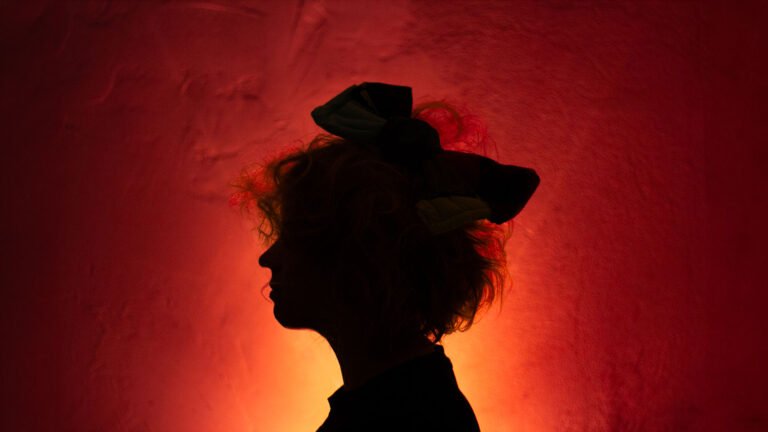
The sound artist’s new album and installation use custom-built macrophones to capture the low-frequency roars of storms, wildfires, and glaciers, making climate change audible.
Brian House has spent years designing ways to hear what human ears normally miss. His new album and accompanying art installation, Everyday Infrasound in an Uncertain World, channels atmospheric infrasound — low-frequency waves from geophysical events like storms, gas flares, meteors, and cracking glaciers. The record is not a composition in any traditional sense. It is a compressed document of a full day on the planet, sped up by a factor of 60 and pitch-shifted six octaves to bring the inaudible into range.
To make these recordings, House built what he calls macrophones. The devices borrow from infrasound array technology used by the Comprehensive Nuclear Test Ban Treaty Organization to detect distant explosions, but House adapted them to listen for the Earth’s own constant, large-scale noises. “Microphones let us hear small sounds,” he explains. “Macrophones enable us to hear big ones.” The result is a 24-minute stereo piece that sounds nothing like ambient music or conventional field recording. It seethes with booms, whistles, and crackles that feel at once alien and immediately physical.
House, who holds a PhD from Brown and has made field recordings for the Nat Geo Network, explicitly ties the project to Roger Payne’s Songs of the Humpback Whale, which reshaped public perception of marine life in the 1970s. He aims for a similar shift around climate change. “What it does is act as a kind of witness to what is happening with our planet,” House says. “If you could hear these wild booms, whistles and crackles as you are walking down the street, you would intuitively understand the scale of the planet in a different way.” The work refuses the idea of a passive Earth. It insists that big things are happening constantly, right now, just beyond our hearing.
Join the Club
Like this story? You’ll love our monthly newsletter.
Thank you for subscribing to the newsletter.
Oops. Something went wrong. Please try again later.

ROMBO Editorial Staff
The collective voice behind ROMBO Magazine’s news, reviews, features, and cultural coverage.