After two decades of meditation recordings from New York, the Inner Splendor founder treats mantra as a clock of attention, moving from private invocation to communal kirtan and back into stillness.
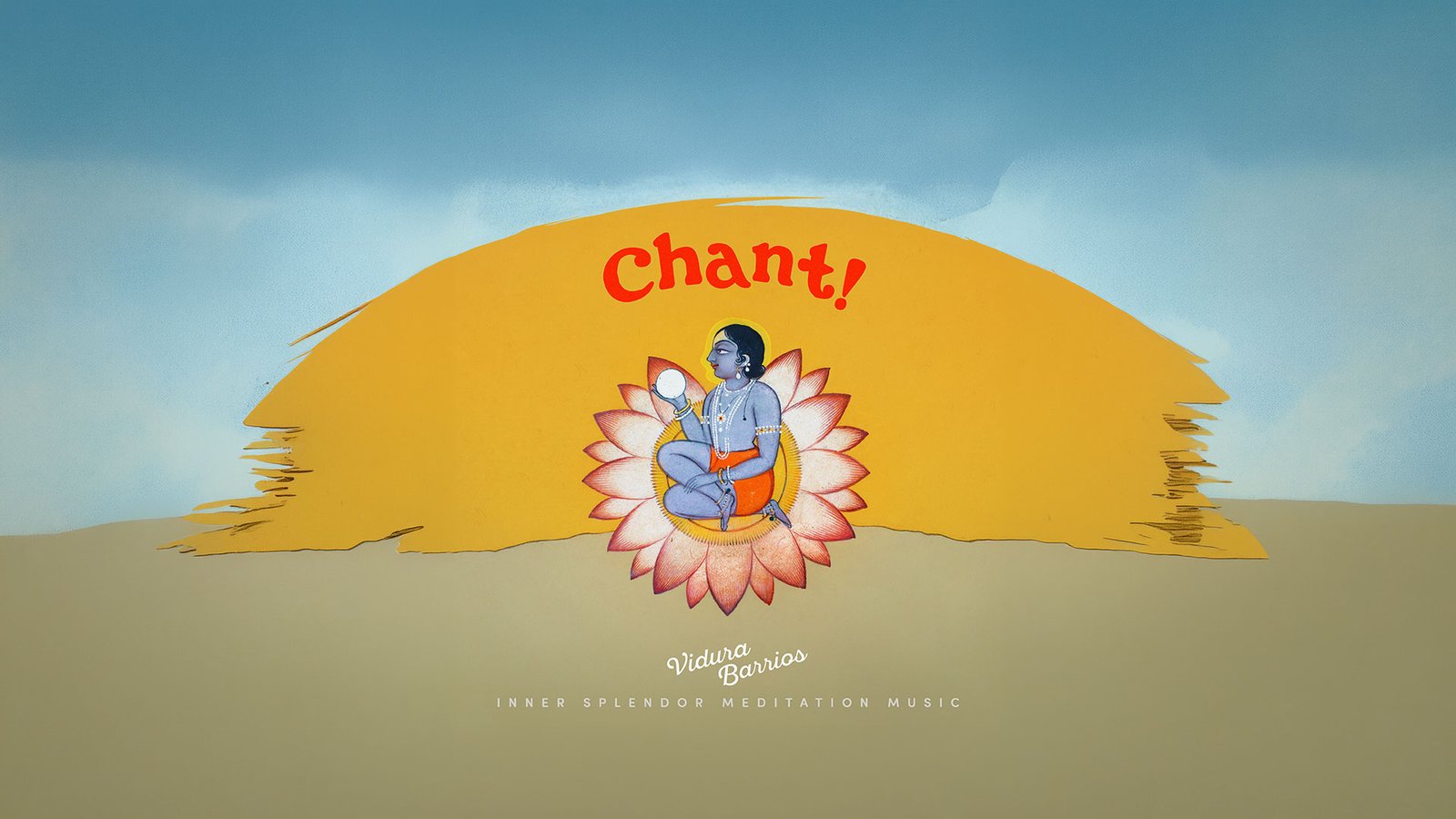
Vidura Barrios has spent nearly twenty years making music for rooms that want to go quiet. Based in New York and working through Inner Splendor Media, the independent company he founded in 2006, he writes and records for meditation, yoga, sleep, and the long aftertaste of practice. His catalogue is large and patient. Mantras, ragas, nature recordings, and slow drones have built him an international listenership that now sits above one hundred thousand monthly listeners on Spotify. Chant!, released in August 2025 with Inner Splendor Meditation Music, is one of the records where that long apprenticeship shows its shape. Seven pieces, just over fifty-one minutes, Sanskrit names held until they become atmosphere.

Before the first voice arrives, think of a mala. One hundred and eight beads, thumb moving, a name said until the hand forgets it is counting. The object is older than any playlist and more stubborn than a skip button. It does not reward novelty. It rewards return. That is the unexpected clock inside Chant!. Barrios is not decorating wellness content with Indian color. He is building a sequence that behaves like a string of beads, each track a different grip on the same act of attention.
Krishna Invocation lasts a little more than a minute and does the work of lighting the room. A low male voice, unforced, sits on a sustained bed that feels like harmonium or a synth drone with the same warmth. Om and Krishna circle until the ear stops waiting for a chorus. Lakshmi Marfil Delgado is credited here, and the opening already hints at the record’s later communal grain. The function is simple and exact. Clear the air. Slow the breath. Make the listener agree to stay.
Govinda Gopala Madana Mohana changes the temperature. Call and response takes over, Delgado and Anjali Bhargava answering the lead line, percussion giving the mantra a body that wants to move. Govinda, Gopala, Madana Mohana, then Radhe, the names of Krishna as cowherd and of Radha as the force of devotion. The arrangement stays lean on purpose. It is built to pull a room into the same phrase, the old satsang logic of one voice starting and many voices catching. After the private first minute, this is the circle opening.
Rama Raghava steadies the pace. Mid-tempo, earthbound, a walk rather than a dance. Rama Rama Raghava holds the ground. Janaki Jiva and Sita Rama lift the melody and let a softer current in. The contrast is written into the names themselves, duty and tenderness sharing the same loop. Barrios keeps the drum pattern even enough to feel like footfall. You can hear why this piece sits in the middle of the album. Energy has been raised. Now it needs a path.
The Maha Mantra arrives twice, and the double reading is the record’s smartest structural choice. Hare Rama Hare Krishna Kirtan, again with Delgado and Bhargava, runs past eleven minutes on a relaxed, lightly driving pulse. Synths open the air. Percussion keeps a soft march. Voices stack until the sixteen-word cycle becomes a wall you can lean on. The next piece keeps the same mantra and strips the urgency out of it. Hare Rama Hare Krishna turns the names into dusk. Reverb widens. Pads hold still. The voice comes closer, almost private again. Same text, different hour of the day. That is the mala logic at work. The bead does not change. The hand does.
Krishna Bija Mantra is the shortest deep cut and the most severe. Two minutes of drone, no drum, a slow monastic delivery of Om Kleem Krishnaya Namaha. Kleem is a seed syllable, a frequency more than a sentence, traditionally tied to attraction toward the divine. The track has the density of japa practiced alone, mala in the dark, the room reduced to one vibrating line. After the public joy of the kirtans, this is withdrawal. Necessary, a little severe, and well placed.
108 Names of Shri Vishnu closes the sequence the way a long recitation should, by refusing to resolve into a hook. Barrios lists attributes across a wide ambient field. Om Vishnave Namaha, then name after name, Krishna and Rama appearing inside a larger current of Vishnu. Ten minutes and forty-four seconds of litany. The ear stops tracking individual titles and starts floating in the accumulation. This is where the opening image pays off. One hundred and eight is not a marketing number here. It is the measure the album has been heading toward, a finished circuit of attention.
What gives Chant! weight is control. The production is clean without turning the tradition into lounge perfume. Drums appear when the rite needs a body. They leave when the rite needs space. Voices stay human. The contrast the press materials describe, celebration against contemplation, is real on the record, and it is organized with more intelligence than a simple loud-quiet playlist. Barrios has said that chanting makes him feel alive, and that repetition calms and focuses the mind. The album takes that claim seriously enough to last fifty-one minutes without inventing extra drama.
There is a limit, and it should be named. Listeners looking for raw field recordings of a temple night, or for the ragged heat of a live kirtan that speeds until it breaks, will hear a studio object. The surfaces are composed, the pacing designed for headphones and practice rooms as much as for a hall. That is the lineage Barrios has been working in since 2006, meditation music as a usable environment. Chant! simply gives that environment a clearer ritual spine.
By the time the last Om fades, the record has done what a good mala does. It has used names to hold time in place. In a streaming culture that treats attention as something to be harvested, Vidura Barrios still treats it as something to be trained. That is why Chant! earns a close listen. The devotion is audible. So is the craft that keeps it from dissolving into background.
Follow Vidura Barrios
Chant! is out now.
Listen: Spotify
Follow: Instagram · YouTube · Facebook · Official Site