In conversation with A.G. Syjuco about solitude, domestic dread, family legacy and the intimate new EP that turns an unopened box into a profound meditation on presence.
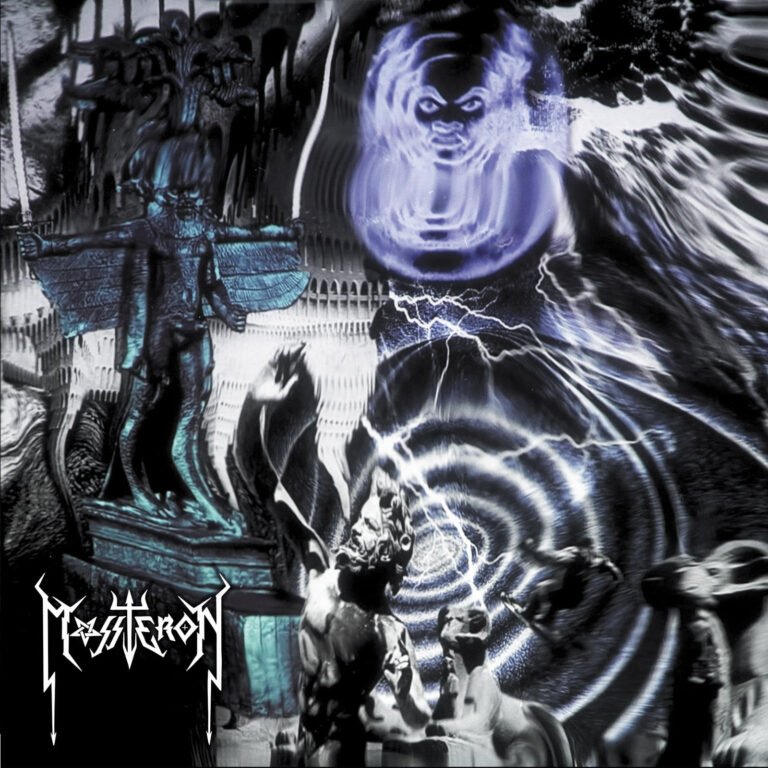
Black Leather Birds is the solo experimental project of A.G. Syjuco, the principal composer and producer of Jack of None. Born in the quiet of 2020, it has always been the space where he steps away from collaborative work to explore atmosphere, spoken word and conceptual restraint. With of Children and Their Sorceries, his second EP, Syjuco has created a five-track record that feels like a series of sealed rooms, places where ordinary objects carry extraordinary weight and stillness becomes its own kind of sorcery.
We sat down with Syjuco shortly after the EP’s release to talk about the personal roots of this new work, the textures of unease, and what it means to remain in the room with whatever refuses to leave.
Black Leather Birds began as a very personal outlet during the pandemic. Five years later, how does of Children and Their Sorceries feel in relation to your first EP?
In some ways, very little has changed. I’ve never made music for commercial reasons. Every project begins with an idea, an image, or a feeling that becomes impossible to ignore. To me, making music has always felt less like a want than a need.
What first drew me to rock music wasn’t just the songs — it was the world-building. I was fascinated by how a record could conjure an entire reality, one listeners could step into and partly inhabit: a shared fantasy that sometimes spilled over into everyday life. You could see it in the subcultures that formed around different genres. Grunge, goth, and punk kids dressed differently, carried themselves differently, saw the world differently. The music wasn’t just a soundtrack to their lives – it shaped how they understood themselves and their place in things. That’s still the impulse behind everything I make. More than songs, what I’m chasing is the feeling of a new world taking shape.
Black Leather Birds has always been the place where I explore those worlds. Both works come from the same creative impulse, but they inhabit very different spaces.
It’s been five years between the two records, and my life has changed significantly in that time. One of the most meaningful changes was my family finally buying a house and beginning the long process of turning it into a home. I think that experience found its way into every corner of this EP.
There’s certainly darkness in it, but I think it’s also profoundly beautiful in its reverence for the concept of “home”. For all its unease, this is ultimately a record about inhabiting a space, filling it with stories, and slowly watching it become part of who you are.
The two records are also very different from a creative standpoint. The first EP was largely instrumental. Throughout most of my creative life, I’ve been the composer and producer rather than the writer. My sister Maxine carried that responsibility in Jack of None, and my father did the same in the work we created together. My role was usually to build the world around the words.
For this record, I felt compelled to step into that space myself. The themes were deeply personal, and writing them in my own voice felt like the most honest way to approach them. Looking back, I think that decision shaped the character of the entire record.
The central image in “The Box” turns something as mundane as a cardboard package into something quietly unsettling. What drew you to that metaphor?
One of my favorite lines in the song is: “FedEx tape on a UPS box — a koan wrapped in adhesive.”
I think that line gets at what the song is really about. When you’re presented with a koan like “What is the sound of one hand clapping?”, your first instinct is to solve it. Your mind immediately begins searching for an explanation, a hidden logic, a way to make the contradiction disappear. But that’s the wrong approach. The point isn’t resolution. The point is acceptance.
In that sense, the box isn’t really a mystery to be solved. It’s something that has arrived in your life and refuses to leave.
I think all of us eventually encounter things like that. Grief is one example. Loss is another. There are experiences that resist explanation and cannot be fixed, no matter how badly we want to fix them. The only real choice is whether we spend our lives fighting their existence or learn to make room for them.
That idea became very personal for me through our cat, Wenli. To call him a pet feels inadequate. He was family. I loved him the way many people love a child. When he was diagnosed with a rare condition called osteopetrosis, the prognosis wasn’t encouraging. The doctors told us there wasn’t much that could be done beyond keeping him comfortable.
For the next two years, our lives revolved around him. Every good day felt like a gift. Every bad day filled us with anxiety and dread. We were constantly aware that our time with him might be running out, and yet he continued to surprise us with how resilient, affectionate, and determined he was. There were moments when he would be lying in bed beside us, purring contentedly, and I would find myself wishing I could simply stop time and remain in that moment forever. That’s really what “Nothing Ever Grows Here” is about.
When Wenli finally passed away, it was crushing. The grief didn’t disappear. In many ways, it still hasn’t. It became something we had to learn to live alongside. Something that became part of the emotional architecture of our home.
What’s interesting is that I wasn’t consciously thinking about Wenli when I wrote “The Box.” But when I listen to it now, the moment where Gerald carries the box inside and places it on the table reminds me of the day we brought Wenli’s ashes home and placed his urn in the small shrine we built for him.
I think stories are beautiful that way. Our lives leak into them, and they leak back into our lives. Looking back, I think the box became a metaphor for accepting the things that never truly leave us. Not solving them. Not conquering them. Simply making room for them and allowing them to become part of who we are.
Across the EP you work with a very restrained palette, low-end rumble, faint mechanical pulses, spoken delivery. How do you approach building those sonic spaces?
I wish I could tell you there was a grand theory behind it, but there really isn’t. I don’t spend a lot of time thinking about sonic palettes in an intellectual way.
For me, every piece begins with an idea, an image, or a feeling, and the sounds are simply that idea trying to take shape. My job is mostly to listen and follow it where it wants to go. The end result is usually the closest approximation I can manage given the tools and skill I have at my disposal.
Tracks like “Nothing Ever Grows Here” and “Almost” carry an almost ritualistic, prayer-like quality. Is that something that emerges naturally in your process?
It’s funny — I don’t think I was consciously trying to write something prayer-like at all. But I completely understand why someone would hear it that way.
My family is Catholic, and spirituality has always been an important part of the home we’ve built together. One of the traditions we’ve maintained is praying the rosary as a family each week. For those unfamiliar with it, there’s a call-and-response structure where the leader and the group alternate, creating a kind of rhythm and cadence that becomes deeply familiar over time.
What struck me is that I didn’t recognize that influence while I was writing the songs. It was only later, while I was mixing the record with my wife, that it suddenly clicked. The alternating male and female voices in “Nothing Ever Grows Here” felt strangely similar to the rhythm of our family rosary. One voice leads, the other responds, and then the roles shift.
I think it’s another example of something that happens throughout this record. Our lives find their way into the work whether we intend them to or not. The things we love, the rituals we practice, the homes we build, the grief we carry — they all leave fingerprints behind.
So while I wouldn’t say I consciously set out to write something prayer-like, I think those songs were shaped by forms of devotion and reflection that have been part of my life for a very long time. The influence was there long before I recognized it.
Your family’s avant-garde legacy and your work with Jack of None have always been present in your music. How much of that lineage lives inside Black Leather Birds?
I often joke that I graduated from the Cesare Syjuco School of Music. Everything I do that’s music-related ultimately traces back to my dad.
When I was in high school, he bought me a Fostex 4-track recorder, and the two of us would spend countless hours experimenting with it. We’d layer sounds, bounce tracks, try strange ideas, and generally push the machine far beyond what it was probably intended to do. It wasn’t just a recording device. It felt like an instrument in its own right.
Looking back, that’s probably the DNA of my entire creative process. The specific tools have changed over the years, but the underlying impulse remains the same: curiosity, experimentation, and a willingness to follow an idea simply because it seems interesting.
More than any particular style or technique, that’s what I inherited from my father. He taught me that art isn’t something you master once and then repeat. It’s something you continually rediscover.
I remember reading that one of the reasons Citizen Kane was so revolutionary was that Orson Welles approached filmmaking without being constrained by the conventions of the medium. He was a theater guy and didn’t know what he was doing. Whether that’s entirely true or not, I’ve always loved the idea behind it. Some of the most exciting creative moments happen when you’re encountering something for the first time and don’t know what you’re supposed to do, or even what’s considered correct.
In a strange way, I think that’s one of the reasons it took five years for this EP to emerge. I wasn’t interested in simply making another Black Leather Birds record. I wanted to rediscover that sense of exploration I felt when my father and I were sitting in front of that 4-track recorder all those years ago. That feeling that anything might be possible, and that the most interesting thing you can do is follow your curiosity wherever it leads.
The dedication on the sleeve feels deeply personal. Does that intimacy change the way the music lands for you?
The inscription on the sleeve — “I cast this into the void. Let it mean that I was here.” — emerged from a period where I was questioning why I make music at all.
I have a career in technology. That’s what pays the bills and puts food on the table. The music exists entirely outside of that. It’s time-consuming, emotionally demanding work, and there are no guarantees that anyone will ever hear it. There were moments when I found myself asking what the point was.
What I eventually realized is that there’s something intrinsically meaningful and noble about taking an idea, a feeling, or a world that exists only in your imagination and giving it form — and more importantly, being the one to do that.
I think part of that has to do with legacy, though not necessarily in the grand sense of the word. I was thinking recently about the phrase “Jack wuz here” that people scrawl on walls and desks. It’s almost comical in its simplicity, but it’s also surprisingly profound. At the end of the day, we’re all trying to leave some trace of ourselves behind. We’re all trying to say, “I was here. I existed. I witnessed this.”
For me, making records is just a more elaborate version of that impulse.
You’ve received recognition for both production and experimental video work. Does external validation affect how you approach new pieces?
I would be lying if I said external validation didn’t matter to me at all. I think it matters to most people, whether they’re willing to admit it or not.
Not to sound overly existential, but there’s something comforting about knowing that you were here and that someone else recognized it. That a thought, a feeling, or a piece of yourself managed to make the journey from your mind into someone else’s. In that sense, recognition feels less like approval and more like acknowledgment.
That said, I’ve never been particularly interested in chasing validation as a creative objective. I would never sit down and make something because I thought it might win an award or receive a certain kind of recognition. If anything, that’s usually the fastest route to making something dishonest.
What do you hope someone carries with them after spending time with the full EP?
More than anything, I hope it resonates with people who get to hear it. The stories and images on the record are deeply personal, but I think the emotions underneath them are fairly universal. Most of us have experienced grief, uncertainty, love, dread, nostalgia, or the strange ways that places become entangled with memory. If listeners can find pieces of their own lives reflected in these songs, that’s incredibly meaningful to me.
If the record inspires someone in their own creative pursuits, that’s a wonderful bonus. Some of the most important artistic experiences in my life came from encountering someone else’s work and realizing it had given me permission to think differently, create differently, or see the world differently. If this EP can do that for even a handful of people, I’d be honored.
Beyond that, I don’t have any particular message I need people to walk away with. The record is ultimately an invitation into a world. What listeners discover there is theirs, not mine.
Follow Black Leather Birds
of Children and Their Sorceries is out now.
Follow: blackleatherbirds.com