Eight Mile Style has widened its lawsuit against Suno, adding 108 tracks it says were used without permission to train the AI music generator. The publisher, which handles Eminem's catalog, is seeking $47.7 million, and the amended filing calls Suno's public denials of infringement "false."
The addition matters less for its size than for the argument attached to it. The filing now accuses Suno of stealing Eminem's voice and likeness, yet it brings no separate claim over either, and the damages figure stays where it was. Eight Mile Style is naming a harm it does not intend to litigate as a count. The voice enters the record as evidence of what the training data produced, not as a right the publisher is asking a court to protect in its own name.
That gap is worth watching. Voice and likeness have been the emotional center of the AI debate since the first convincing imitation circulated, but the legal machinery around them is still being assembled, and publishers have to work with the tools they have: copyright in the compositions, plus whatever the training process reveals about copies made along the way. Eight Mile Style's catalog gives it an unusually clean test case. The songs are among the most recognizable in hip-hop, and Eminem's delivery is among the most imitated. If a model can produce something that sounds like him, the question of what exactly was ingested becomes concrete.
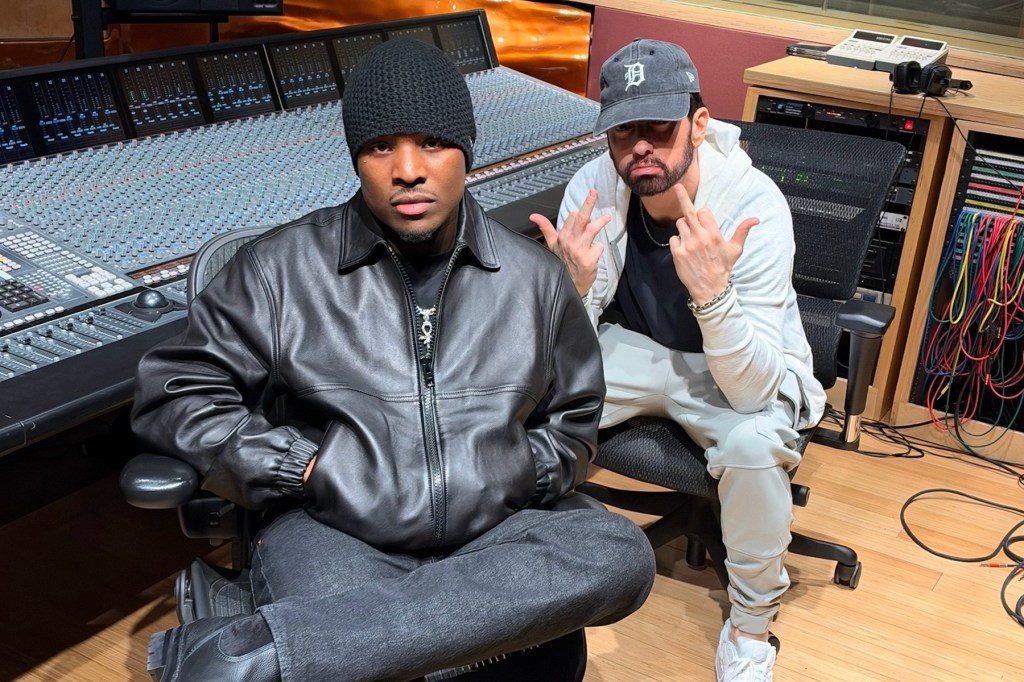
Eminem's business has been active on several fronts lately. IDK signed to Shady Records and released a J Dilla-produced single with him, and the 30th anniversary of Infinite arrived with a streaming EP and a documentary, both covered on ROMBO's Eminem page. The publisher's filing sits apart from that release schedule, in a courtroom where the stakes are the terms on which any of it can be fed to a machine.
Suno has said its training practices are lawful. Eight Mile Style's amendment answers that claim directly, and the 108 titles are the substance of the answer: a list long enough to establish a pattern, which is what an accident cannot produce. What the case will turn on is whether a court treats that list as evidence of copying or as a description of a market. The voice, for now, is the loudest thing in the room and the least enforceable.