On 5 August this year, more than 150 people crowded into St. Burchardi, a church in the German town of Halberstadt, to hear one note arrive. They had come for John Cage’s Organ²/ASLSP, whose instruction, as slow as possible, the town has taken at its word. The performance began on 5 September 2001 with a rest that lasted until February 2003. Sandbags hold the pedals down, pipes are added and taken away by hand, and the piece is due to end in 2640, 639 years after it started, the distance between the first organ documented in the town’s cathedral, around 1361, and the year 2000. The next change is booked for 5 October 2027. I find the whole thing moving, mostly because everyone in that church knows they will never hear the end.
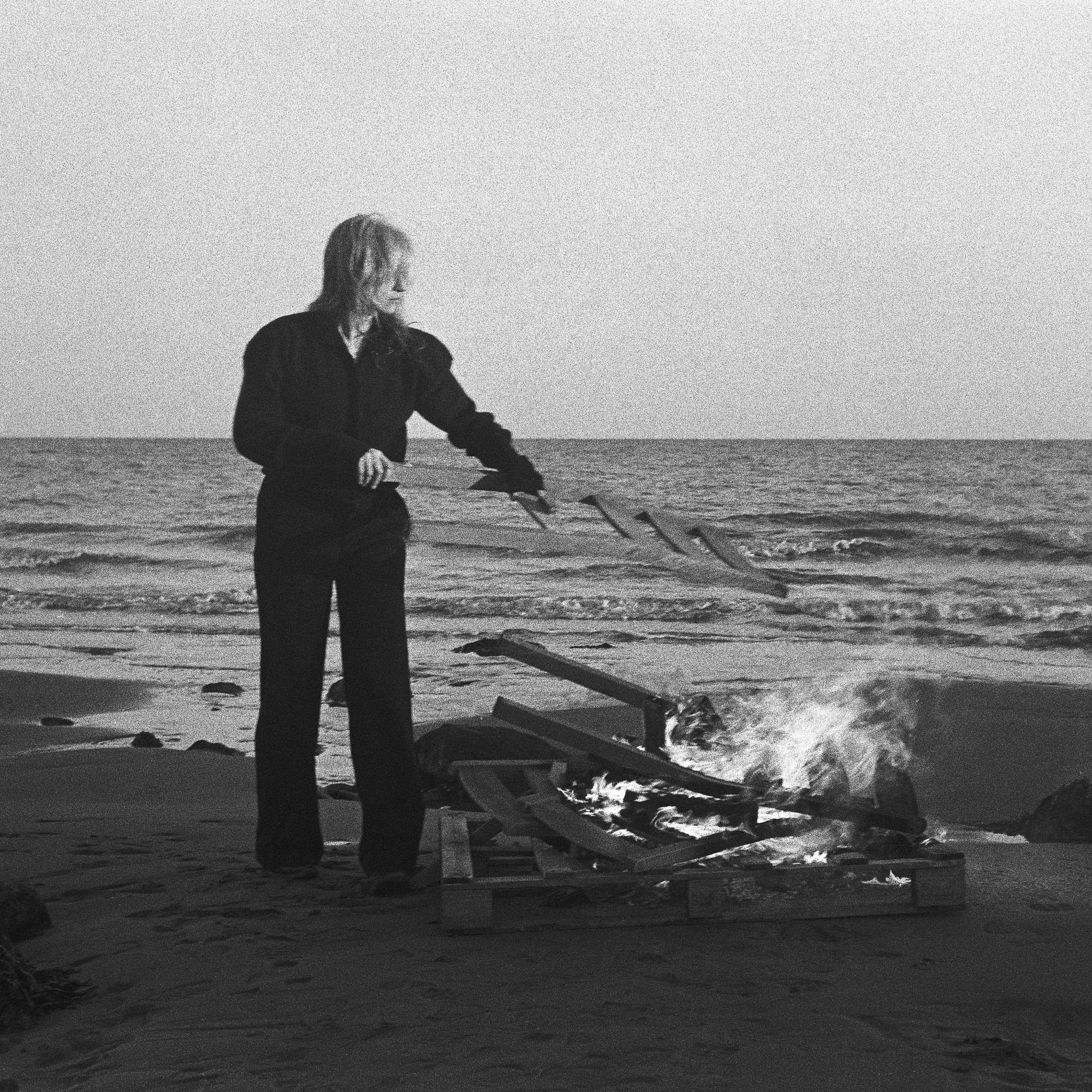
Kali Malone has spent most of her career much closer to Halberstadt than to the pop charts. The US composer, who lives in Stockholm, writes music that holds a chord until it opens, and her 2019 album The Sacrificial Code, a set of secular canons for pipe organ, asked you to sit still for a long time and rewarded you for it. Burning Song, out now on Ideologic Organ and her first solo full-length since All Life Long in 2024, does something I did not expect from her. No track on it runs longer than seven minutes, and the whole record lasts forty. In Halberstadt, the opening rest alone lasted seventeen months.
She recorded it in another German church, the Thomaskirche in Leipzig, where Bach was cantor for 27 years and where he is buried at the altar. Malone has said that a composer’s grave, where you would expect a saint’s, is what turned it, for her, into a church that belongs to music. Its organ was built in 2000 and tuned to the conventions of Bach’s time, and she plays it with two musicians she has worked with before, the cellist Lucy Railton, and Stephen O’Malley, who co-founded Sunn O))) and here bows an acoustic guitar. This is the part I love most. An organ in a church that size could flatten two string players, and Malone scales it down to their size instead, so the three sounds lean into each other until I can no longer say who is playing what. In Halberstadt a machine holds the note. In Leipzig three people are breathing together, and you can hear it.
What you hear is change at the speed of a held breath. When two pitches sit very close together, their sound waves rub and the note starts to throb, a slow pulse that acoustics calls beating, and Malone’s whole art lives inside that pulse. On Grieving Figure a higher voice leans on a low, grainy drone until the air between them shakes, then steps down into something darker. Map The Path and Heavy With Fruit let a single high tone hang alone before a deep chord fills the floor beneath it, the kind of low note you feel in your knees before you hear it. Halberstadt makes you wait years for a change. Malone puts one inside every chord, which is why seven minutes is enough.
Shorter has also made her warmer. Read the titles in order and they tell a small story of mourning: Grieving Figure, Crawling Ashore, Sounding A Void, Heavy With Fruit, and at the end My Eve My Dawn. I hear this as her most openly emotional record, and the brevity is part of that. Halberstadt is a monument, built to outlast everyone who visits it. These pieces are sized for a person, and I think Burning Song is exactly the right name for them: each one burns down like a candle in a side chapel, lit for somebody, bright for a few minutes and then out.
So who is it for? If you have always meant to try drone music and never found the afternoon, start here: forty minutes, seven pieces, nothing you need to know in advance. If you know O’Malley from the overwhelming volume of Sunn O))), this is the same weight at the volume of a conversation. If Sarah Davachi, Grouper, Stars of the Lid or the slow pieces of Arvo Pärt live on your shelves, it belongs next to them. Play it late, on headphones, or on a train with a window seat. I would not put it on at a dinner party. It wants your attention, and it pays it back.
My one complaint is the Halberstadt complaint. A few pieces end just as I have learned to hear them move. Bells On A Branch holds a single reedy drone and lets only the faintest ripples cross it, and at five and a half minutes it stops before the ripples become a shape. I would have given it twenty more minutes. On a record this disciplined, that is a compliment and a criticism at once.
The longest piece comes last. My Eve My Dawn runs six minutes and fifty-five seconds, and when its low, brooding chord finally climbs into a clear, open one, the church seems to fill with morning light. The next note in Halberstadt sounds on 5 October 2027. Between now and then, Burning Song could play from start to finish more than eleven thousand times.