After years of tracing the uneven path from grief toward restoration, Lee Miller Matsos arrives at an EP that trusts the slow chemistry of what remains.
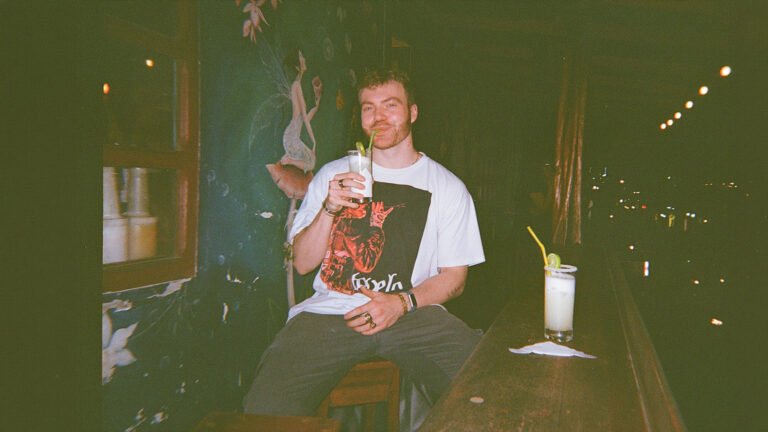
Lee Miller Matsos grew up in northeastern Ohio inside a family that lived on stages. His father, a Greek immigrant who once worked the New York club circuit, later settled into the world of light opera. His mother moved through theater. Young Lee watched Frank Sinatra and Sammy Davis Jr. from the seats, then trained in classical voice, spending a year at the San Francisco Conservatory of Music before the formal operatic path began to feel like a borrowed coat. Years later, after the loss of his mother and a stretch of personal upheaval, he enrolled at Holland College in Prince Edward Island, a Berklee partner school. There, in the relative quiet of the island during the early pandemic, the songs that would become the Metamorphosis series began to take shape.
What followed was a deliberate, multi-part record of non-linear movement. Metamorphosis, Pt. 1 arrived in 2023. Pt. 2 followed in 2024. Pt. 3, released on 14 August 2026, closes the sequence.
Somewhere in the background of this music sits a quieter image. Think of a backyard compost pile. Kitchen scraps, leaves, coffee grounds, time, a little rain. Nothing dramatic happens for weeks. The surface looks like waste. Underneath, microorganisms work without announcement, converting the discarded into the richest soil. The process is continuous, slightly messy, and entirely necessary. You do not force it. You tend the conditions and wait for life to respond.
That is the temperature of Metamorphosis, Pt. 3.
Matsos has said as much in the notes that accompany the release. Each of us is a process. We are not fixed. The useful question is not why something happened, but what we are planting now. The five tracks here move through that exact logic. They do not rush toward resolution. They allow the material of ordinary difficulty to break down until something usable appears.
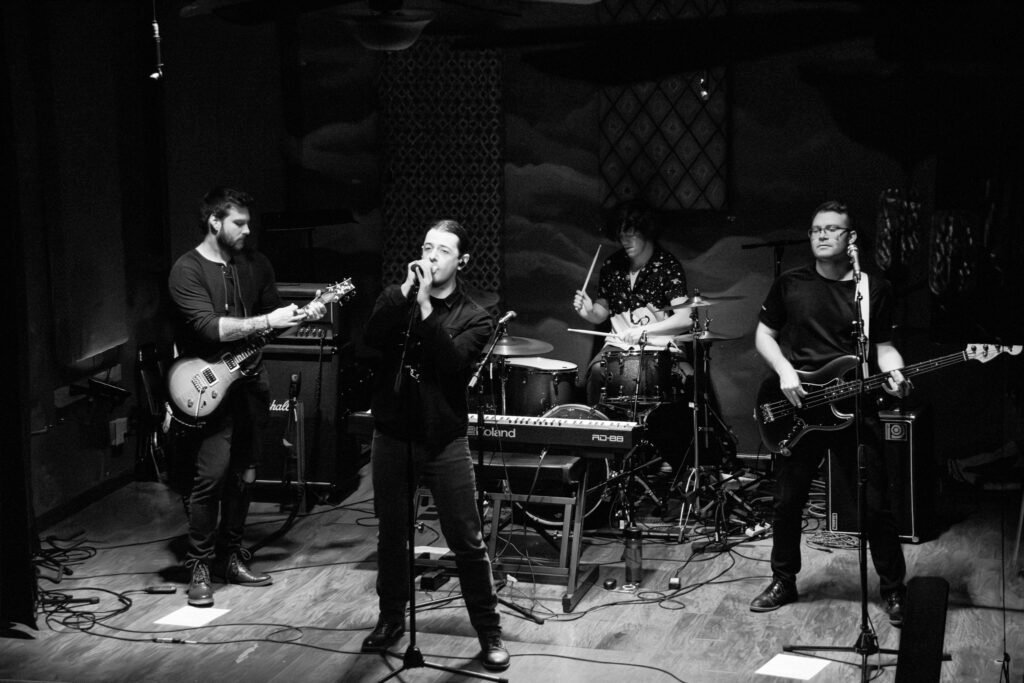
The EP opens with “Love Came Home To Stay,” a 2026 remaster that still carries the weight of its original writing. Matsos begins from a place of ordinary safety, an existence that never worried about danger, then lets the ground shift. The arrangement stays close, piano and guitar held in careful balance, the voice carrying a lived-in vibrato that refuses to decorate the feeling. By the time the refrain settles, the song has already done the harder work of turning private ache into something that might one day help carry another person’s weight.
“Youth Is Gone” tightens the frame. Time that once felt abundant reveals itself as already spent. The track moves with more kinetic pressure, the production less willing to leave empty space. There is urgency here, the kind that arrives when the illusion of more days collapses. Matsos does not dramatize the panic. He simply keeps the rhythm moving forward, as if the only available response is to keep planting while there is still light.
“Change” sits at the center and earns the attention it has already received as a single. Recorded in Los Angeles with a vintage 1970s Trident console, the track leans into moodier textures and a more experimental alternative edge. The lyric begins inside denial and the daily loop of survival, then opens toward the possibility of letting control loosen. The arrangement mirrors that shift, moving from tighter, more circular patterns into wider harmonic space. It is the moment the EP most clearly understands that growth rarely announces itself with a single decisive act.
“Highway To Peace” slows everything down. The question that opens the song lands with particular weight: who do you believe in when everyone is tired of waking up. The production gives the track room to breathe, colder textures, longer resonances, a sense of collective fatigue rather than purely personal crisis. Matsos holds the desolation without forcing it into comfort. The road toward anything resembling peace is long and unglamorous, and the song respects that distance.
The closing track, “Garbage On Your Street,” completes the circle with unexpected warmth. After the preceding tension, the arrangement returns to something more intimate and organic. The lyric finds value in the imperfect and the discarded, the everyday debris of living. Love appears not as an escape from the mess but as a decision made inside it. The final minutes of the EP feel less like a grand statement and more like a quiet hand extended.
Across its five songs, Metamorphosis, Pt. 3 refuses the language of sudden breakthrough. It trusts process. The production favors analog presence and measured space over theatrical excess. Matsos’ voice, shaped by years of classical and theatrical training, remains the central instrument, clear and unhurried. What gives the record its weight is the consistency of its attention. It keeps returning to the same essential work: noticing what is being planted, accepting that life will answer in its own time, and finding enough steadiness to keep the cycle moving.
The trilogy ends not with arrival but with a clearer sense of how to continue.
Follow Lee Miller Matsos
Metamorphosis, Pt. 3 is out now.
Listen: Spotify · SoundCloud · Bandcamp · YouTube
Follow: Instagram · Facebook · TikTok · Official Site · Linktree