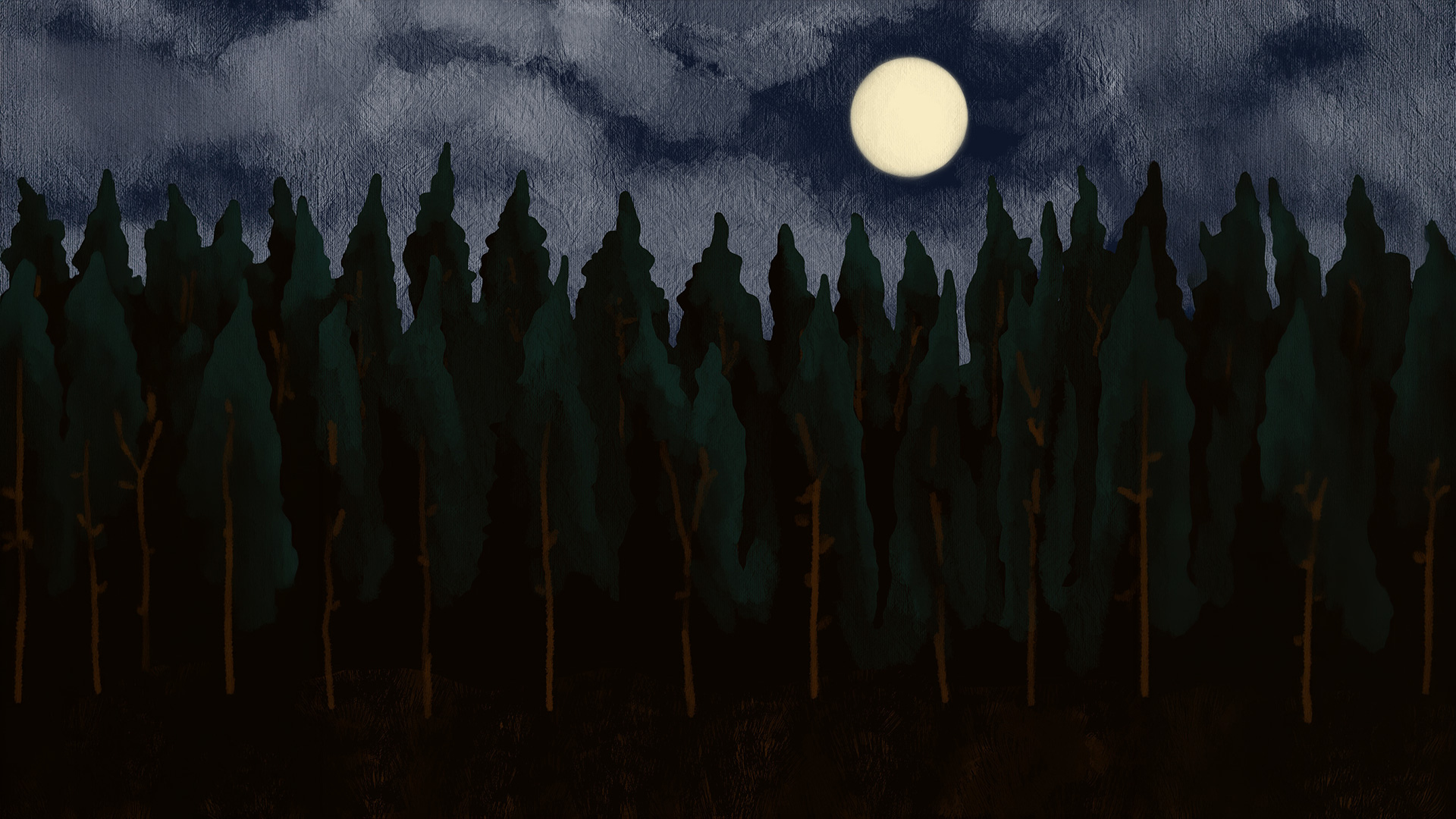
Teo Saefkow is a queer singer-songwriter and producer based in so-called Vancouver. They grew up in the small northern town of Smithers, British Columbia, and earlier released two albums under the name Scalawag. Sheep Dog is the first single under their own name. They performed every instrument live, mixed the track themselves, and sent it to Elisa Pangsaeng at CPS Mastering in Vancouver. The result carries the physical grain of hands on strings and sticks rather than the smoothed surface of programmed parts.

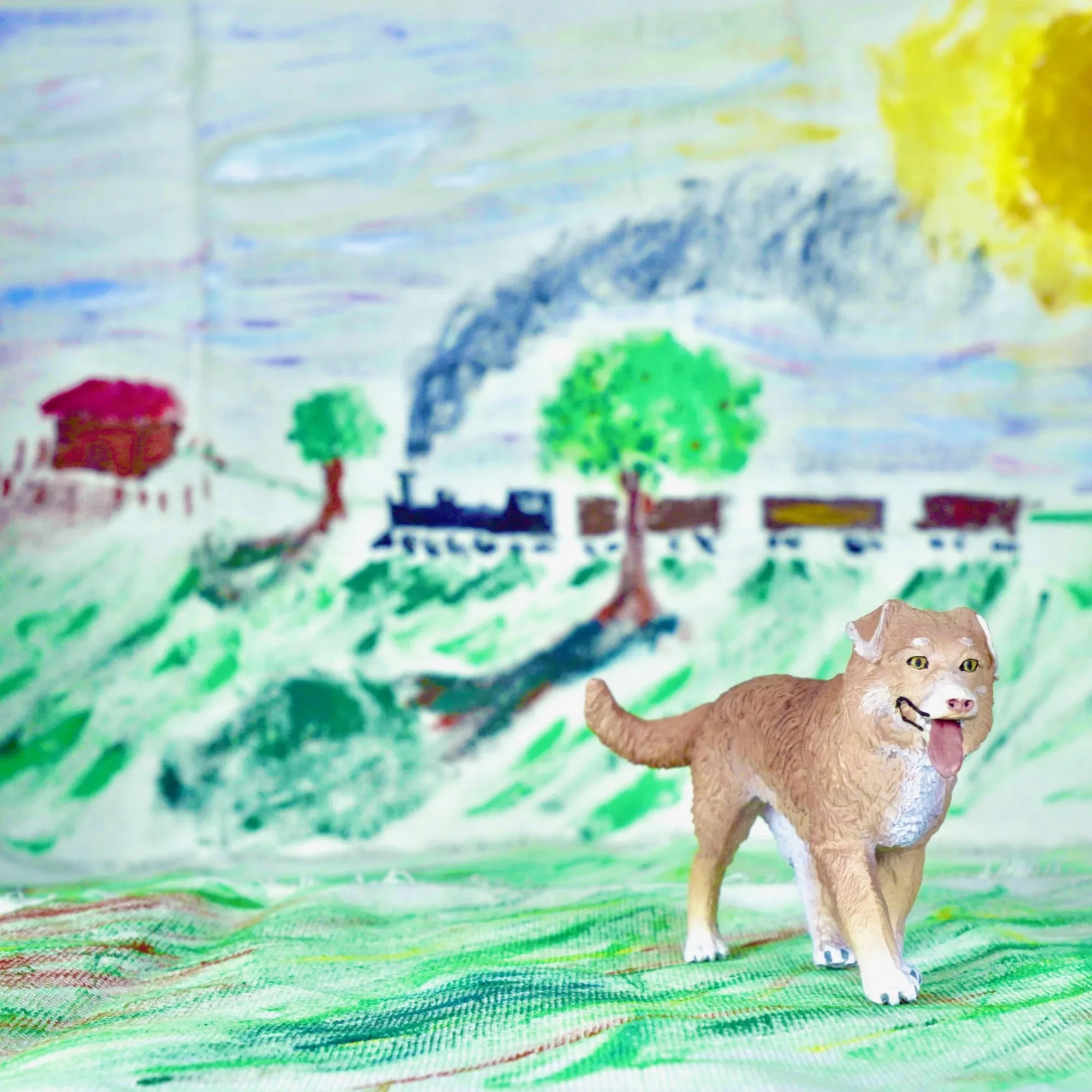
There is a particular silence that only appears after a working animal has been taken out of the field. A border collie that once moved sheep across open ground will, for a time, continue the same tight circles around an empty yard, or around furniture, or around children who do not need herding. The motion remains. The job has gone. At some point the dog stops circling and simply eats what is left in the bowl. That is the moment the lyric lands on. “I’m a sheep dog eating poultry, being left alone and fed.” The image is precise. The animal that once worked is now fed and ignored, its role reduced to consumption and presence.
The song opens inside that reduction. A clean electric guitar arpeggio, lightly reverberant, holds a suspended space. Nothing pushes forward. The voice arrives close and low, almost private, as if spoken into the same room where the mud has already settled on one side of the bed. It names the other person first: “You’re a steam train going sideways faster than you ever have.” Trains do not travel sideways. The motion is chaotic, directionless, and still faster than anything the narrator can match. Against it sits the counter-image: “I’m a soapbox with no engine waiting on the factory floor.” A soapbox was once a packing crate turned into a platform for speaking. Here it has become a vehicle that was never fitted with power, left among unfinished objects. The asymmetry is structural. One figure keeps generating impossible speed. The other has already stopped.
The arrangement follows the same weight. Bass and drums enter measured, almost dragged, giving the daily inertia a pulse without lifting it. The voice stays soft across the early lines about back roads left behind and the wish to fly half as fast without gravity or tricks. Then it lengthens. Vowels stretch. The tone roughens as the guitar thickens into distortion and the rhythm marks time more heavily. What had been contemplative becomes dense. The wall of sound does not explode into release so much as it thickens around the same stuck place. “I’ve been weighed down by my own ground / So it takes a while to get back up.” The mud is not metaphorical decoration. It is on the bed. It is the thing that has to be washed off, repeatedly, from one side only.
The real subject is the depressive paralysis that settles inside a relationship once it has become asymmetric and emptied of use. The narrator dreams of a canvas for the stories still in their head, then chooses sleep. “But I’ll sleep all day instead / Waiting for the end of the world.” The end of the world here is not spectacle. It is permission to remain still. The spider in the rafters weaves beautiful fairy tales that humans will swat down. The sheep dog eats the poultry and is left alone. Both images describe a role that has already failed. What the narrator wanted and now has turns out to be useless. “And I’ve got no patience left for that useless stuff / That I wanted to have and now I’ve got.”

The voice rises on those lines, urgent and rough, then cuts. The final demand arrives clean and sudden: “So leave me alone.” There is no lingering chord, no fade that softens the request. The track ends where the patience ends. What remains is the empty space after the wall of sound drops, the same suspended quiet that the arpeggio held at the start, only now it belongs to someone who has named the stall and asked for the room to be emptied.
Sheep Dog does not offer the comfort of a childhood story that still works. It stays with the factory floor, the mud on one side of the bed, and the decision to stop performing motion for a relationship that no longer requires it. The weight is in the refusal to keep circling an empty yard.