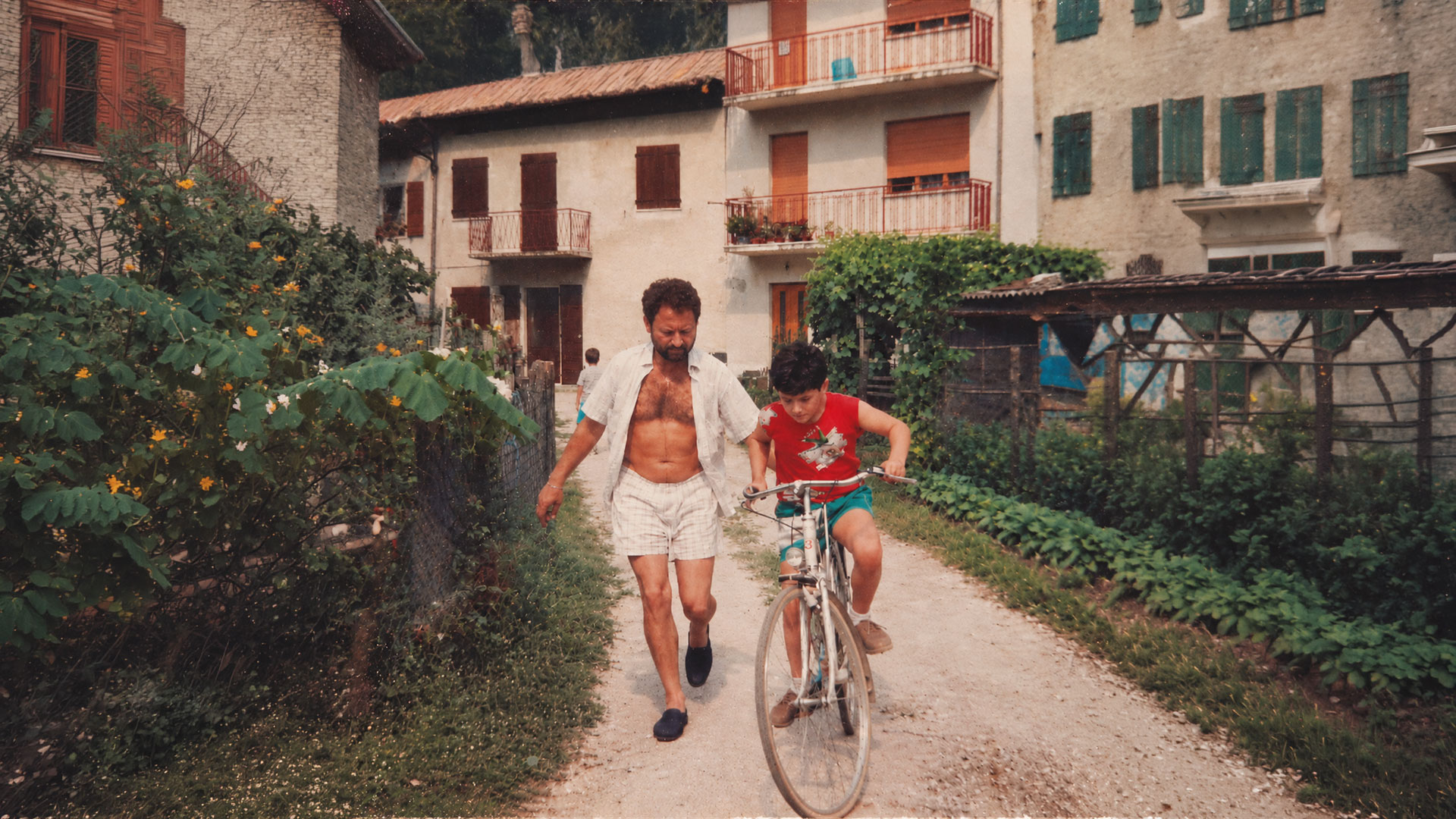
Rico Fabello has been naming records after months that still have a temperature. He spent his first nine years in Boston, with summer weekends at a family cottage on Loon Pond in Acton, Maine, then moved north for good in June 1999. Piano came first, riffs picked out on his father’s instrument in the entry hallway. Drums at nine. Guitar at thirteen. The woods, fields, and streams of those years stayed in the writing. In 2023 he released July 1999, a math rock album of polyrhythms and angular guitars, named for his first full month in Maine after a long gap between releases. He lives in London now, works alone, and keeps no social media on purpose. November 2008 is the next date he has decided to keep. Ten tracks. Thirty-nine minutes. Written, recorded, mixed, and mastered by Fabello himself.
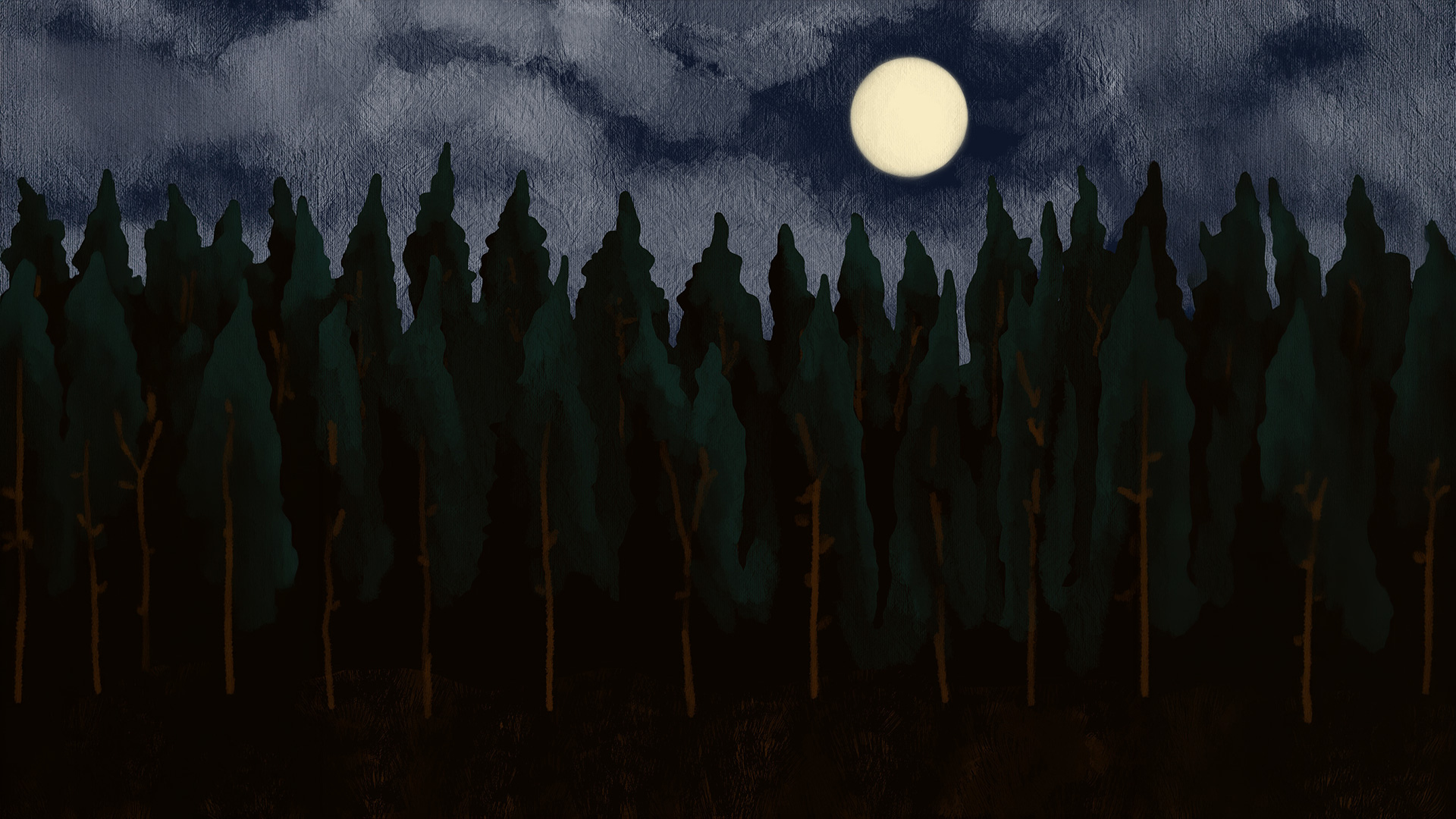
Anyone who has stood over a risograph knows the small disaster that makes the print. The first pass lays the forest. The second pass lays the moon. If the paper shifts by a hair, the image is still the image, only the color no longer sits where the eye expects it. Fabello’s cover is that kind of print, pines at night under a full moon, the grain of a duplicated plate. The album behaves the same way. Almost every song sways in 3/4 or 6/8 and circles the same home key of D, brightened by the Lydian mode, the scale that lifts a chord toward open sky. Then one note refuses the agreement. A half-step. A diminished turn. A tritone. The lullaby holds. The registration does not.
July 1999 was the month the light came in, golden through the trees, water still blue. November 2008 is the later pull of the same plate. The songs rarely explain the loss. They furnish it. A mother rests her legs. A yellow tile floor runs under a child’s feet. A sister keeps watch over a crib. Someone reaches across a bed and finds the other side empty. Doors, ceilings, lakes, and forests do the narrative work. Water rises through the sequence as rain, a pond behind a house, a lake, a flood, until the setting and the memory are the same substance. On “Untitled,” the voice offers itself as shelter, tree, father, breeze, then turns. “I’ll be the space between you and your youth that you can’t ever cross.” The line is the gap between the two impressions.
“Tired” opens on a drone and a sway, familiar places losing their color, cousins leaving through a door, before a fuzzed guitar finally swells the frame. “The Way Down” is one of the record’s centers, dissonant alt rock with glockenspiel and stacked harmonies, an old reunion in a rainstorm as the water climbs verse by verse. “Yellow Tile Floor” strips back to voice and acoustic guitar, survivor’s guilt told through fragments of early childhood. When the last chord rings, you can hear Fabello walk away from the microphone. The room stays in the take. That small human exit carries more weight than a louder arrangement would.
The middle of the album widens without leaving the house. “A Duplex in the Sky” is the heaviest passage, dissonant riffs and glitched vocals, violence and fragility set in the same corridor. “East Lake House” goes sparse and soaked in reverb, then opens a vocoder choir in the middle of the hush. “From the Clouds” starts as fingerpicked folk, grows into a lilting full-band sway, and ends in a heavy prog-folk outro. “Luther Shimp,” an instrumental for acoustic guitar and glockenspiel, keeps the same pulse with no voice at all. The meter is the argument. A chorus takes an extra bar. An outro slips between 6/8 and 7/8. An instrumental uses a spider capo so the strings will clash on purpose.
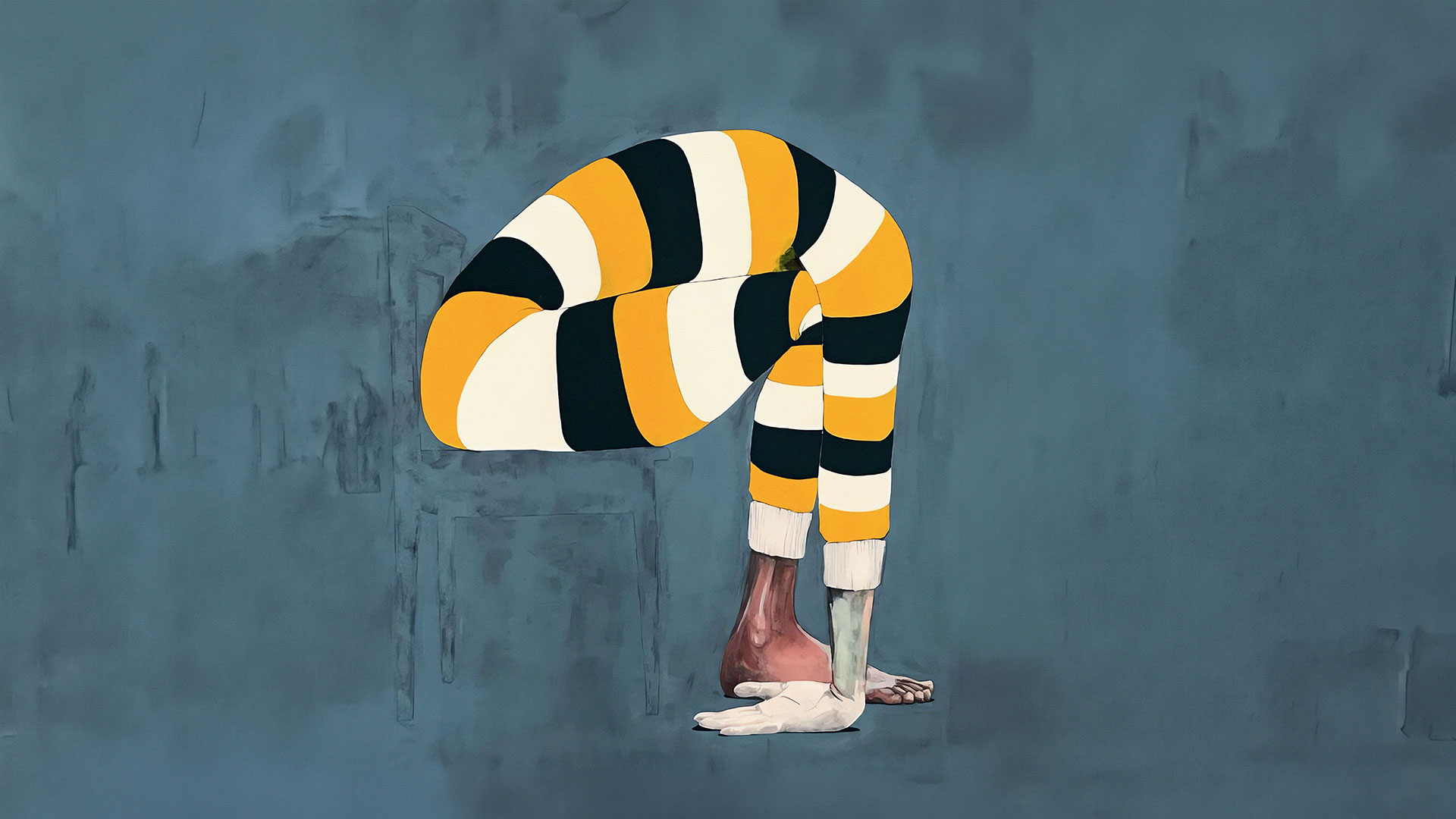
“Peaks and Valleys and Valleys and Valleys” is the turn the title already warns you about. What begins as a love song, legs as ground, arms as rivers, bodies sharing a language, arrives at a repeated question about a girl who is no longer there. “Untitled” spends most of its length promising to stay, then reveals the speaker as time. “Stranger” closes the record in driving, despondent alt rock and leaves the final chord unresolved. The hanging harmony is the point. A closed ending would pretend a crossing the songs have already refused.
The limit is real. Because so much of the album shares a key, a sway, and a whispered register, the quieter stretches can flatten if you are waiting for a hook to rescue them. Fabello trusts atmosphere as structure, and sometimes the structure is a circle. The tracks that earn their length are the ones that let a single wrong note, a glitched voice, or a slipped bar do the work. When that disturbance arrives, the sameness becomes pressure. When it stays away, the lullaby risks becoming wallpaper.
What remains is a month treated with the care of a plate you only get to pull once. The math-rock brightness of July 1999 belongs to the earlier month. Here he is printing the same landscape after the paper has moved. You can still see the pond, the tile, the crib, the moon over the pines. You cannot step back into the month that held them. November 2008 keeps the gap audible, right down to the chord that will not close.