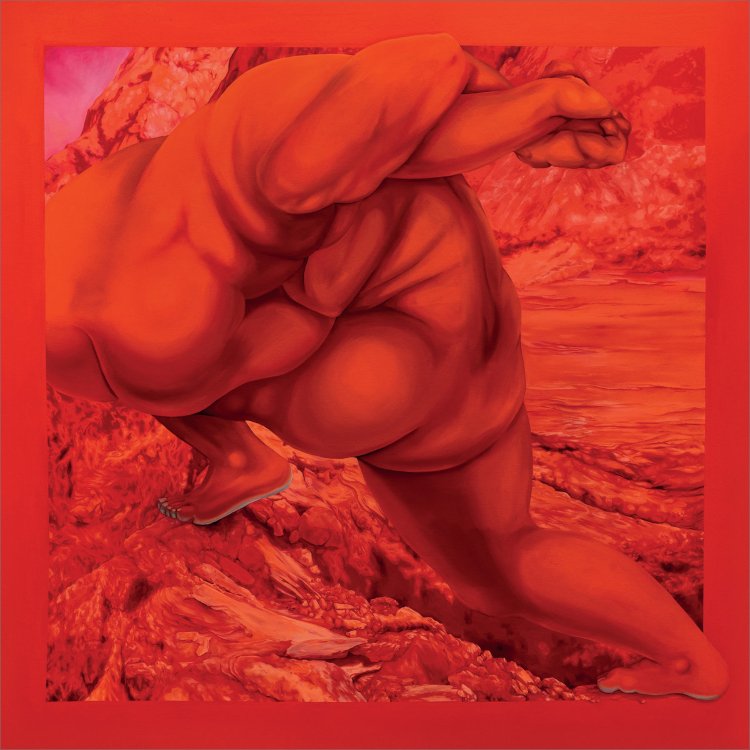
On his 14-track album from Warsaw, the composer-producer builds a circular instrumental world where motifs return inverted, like light crossing a pinhole.
Warsaw composer and producer Tilen Kammer works the thin ground between contemporary classical writing and electronic construction. His named points of gravity are familiar enough. Hans Zimmer for scale. Max Richter for the long melodic line. Ludovico Einaudi for clarity of motif. Nils Frahm for the felt touch of a room. Those names describe a climate more than a method. What he actually does with WSt, the 14-track original album released on 20 June 2026, is quieter and stranger than the lineage suggests.
A camera obscura is a dark chamber with a small hole. Light enters. The world outside appears on the opposite wall, inverted and softened, still recognisable if you stay with it. Kammer’s surname already holds that room. Kammer, chamber. WSt behaves like one. The first half of the record lets shapes arrive upside down. Pads collect before a pulse does. Melodies hover before they decide they are themes. Then the same titles come back as Part 2, and the image rights itself without explanation.
That architecture is the album’s real argument. Skim, Nel, D Dance and Sun each exist as paired rooms. The listener crosses the same threshold twice. The second pass is never a copy. It is the same weather seen after the eye has adjusted.
Skim Part 1 opens in near-stillness. Harmonic carpets and dark orchestral pads sit without a conventional grid. Suspended chords hold a climate of isolation, a prelude that refuses to announce the plot. One then cuts the air. Synthetic lines braid through hypnotic sequences. The track grows by tightening and loosening, club-adjacent without becoming a floor tool. D Dance Part 1 commits further. The pulse is marked now, wrapped in ethereal synth beds, small timbral shifts doing the work that a drop would do in a less patient record.
Wake Up is the first real lift. Off-beat rhythmic pressure, IDM flicker, stacked acoustic traces inside the electronics. The piece climbs toward a cinematic opening, then leaves the gesture hanging. Nel Part 1 pulls the record back into suspension. Melancholy lines sit on stratified synth, fluid rather than sectional. Breeze and Never Thought You Were Real slow the temperature again. Keyboard beds, synthesised string phrases, pads that feel like air moving through a corridor. Time thins. The titles start to behave like rooms you can stand in.
Sun Part 1 changes the light. Warmer pads, a softer aurora, strings that glow instead of press. Then Skim Part 2 returns the dark cloth of the opening, denser, as if the first image had been a rehearsal for a heavier print. Nel Part 2 deepens the same motif. Vita arrives as a more exposed piano figure, arpeggios against an ether of harmony, the closest the album comes to a private lyric without ever using a voice. D Dance Part 2 reopens the rhythmic file with new grain. Ridge is the sharpest turn, a complex IDM weave under cinematic width, tension and release handled with unusual control. Sun Part 2 closes the circuit. Warm pads, wrapping arpeggios, a long exhale that resolves the loop without sealing it shut.
The production is careful about absence. No vocals. No ornamental filler. Silence is load-bearing. Instruments enter sparsely and meet in fragile textures, which is where Kammer’s stated taste for space becomes audible rather than decorative. The electronic writing can be club-literate. The harmonic writing can be almost liturgical. Neither mode wins. The record keeps both in the same chamber and lets them share air.
WSt will be easy to file under post-classical playlist language. That file is too small. The cyclic plan is closer to modular building than to a film cue. You can hear Warsaw in the patience, in the refusal to rush a motif toward a hook, in the sense that a form can be rebuilt from its own rubble. The title itself looks unfinished, a west with the vowels pulled out, a direction abbreviated until it becomes a code. Kammer looks toward that western catalogue of piano-and-pad cinema, then turns the room around and makes the listener watch the image form twice.
What gives the album weight is that second look. First light, inverted. Then the same landscape, readable, still slightly cold. A dark chamber doing its quiet work.
Follow Tilen Kammer
WSt is out now.
Join the Club
Like this story? You’ll love our monthly newsletter.
Thank you for subscribing to the newsletter.
Oops. Something went wrong. Please try again later.

ROMBO Editorial Staff
The collective voice behind ROMBO Magazine’s news, reviews, features, and cultural coverage.