On Dragon’s Blood the German producer refuses to write four different songs about divorce. He writes one and then subjects it to successive states of time, space and pressure until the material itself becomes the recovery.
Daniel Higley works from Regensburg with a quiet insistence that the personal can still carry cinematic weight. His catalogue already shows an ear for atmosphere and emotional clarity, drawing from the structural restlessness of Radiohead and the melodic economy of the Beatles without ever sounding like either. The production values on recent work have been high. Mixing by Mitia Wexler, mastering at Abbey Road by Stefan Brown. Yet the real signal has always been the way he holds feeling in place long enough for it to change shape.
Dragon’s Blood, released 10 July 2026 as the flagship piece from the forthcoming album The Pendulum, arrives as a three-version EP built around a single song. The story behind it is straightforward. Divorce, surrounding turbulence, the slow work of standing up again. What Higley does with that material is less straightforward and more interesting.
Most artists in this position would write a suite of different songs to map the stages of recovery. Higley does the opposite. He writes one song and then forces it through successive states of pressure and duration. The lyrics stay almost identical. The production becomes the narrative. The result feels less like a collection of remixes and more like a controlled experiment in how memory and feeling reconfigure the same raw material under different conditions. That is the quiet radicalism of the record. The fixed words become a constant. Everything else is variable. The listener is invited to inhabit the same confession at three different temperatures.
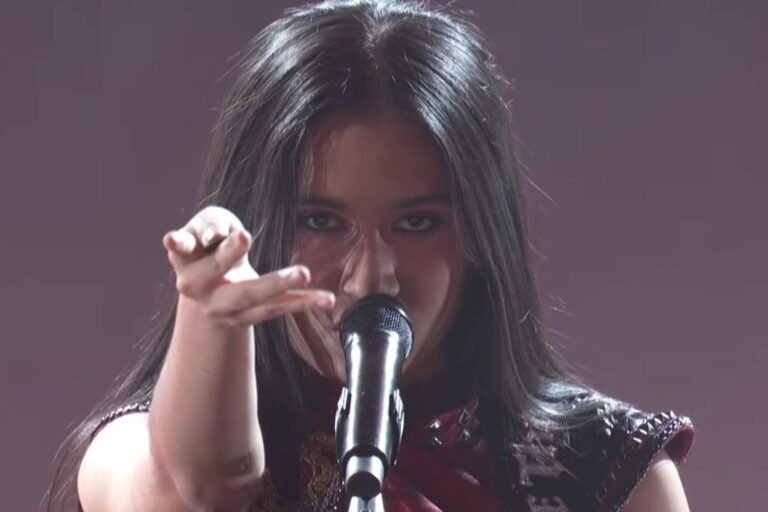
The original version opens with a direct admission. “Here I lay, singing to a sad song / About a girl who never loved me anyway.” Dämmerlie’s voice arrives vulnerable and unguarded. She was found through an ad Higley placed on a Berlin light pole, a detail that somehow fits the unvarnished tone of the whole project. The arrangement moves from intimate acoustic space into wider cinematic territory, the Nigerian choir lifting the chorus without softening its edge. “Dragon’s blood / They dragged your name through the mud.” The line carries both private injury and public residue. By the time Dämmerlie reaches “I miss the person I used to be,” the track has already established its central tension. The wound is still open, but the song is already looking for a way to stand inside it.
The second version, Short Story Long, refuses to hurry. Where the original moves with a certain narrative economy, this one expands the same material by more than a minute. The extra space is not decorative. It is the point. After the line “They carved your name into wood,” the arrangement opens into layered strings, synth and guitar that feel like the mind circling the same image. The mantra “I miss the person I used to be” becomes obsessive rather than merely sorrowful. This is the phase of metabolising. The trauma is no longer a single event. It has become a room the listener is asked to sit inside without exit.
Under the Shadow of the Sea is the deepest cut. The production sinks. Reverb thickens. The drums arrive muffled, as if heard from below the surface. Bass grows heavier. When Dämmerlie sings “Where did we go wrong?” the voice no longer feels like a present-tense plea. It feels like a memory surfacing in water. The anger of the first version has drained away. What remains is pure distance, the sensation of being sealed off from the world that caused the damage. It is the most physically affecting of the three. You feel the isolation in the body before you process it as idea.
Higley’s decision to keep the lyrical core almost unchanged across the versions is what gives the EP its weight. The same sentences are forced to mean different things depending on the sonic climate around them. Confession becomes obsession. Obsession becomes submersion. The production does the emotional work that most concept records assign to new lyrics and new melodies. That restraint is the real craft here. There is also a quiet internationalism that never announces itself. A German producer, a local singer discovered on a Berlin street, a Nigerian choir, Italian mixing, London mastering. The personal story remains local and specific. The sonic world is deliberately wider. The combination avoids both provincialism and empty cosmopolitan gesture.
Dragon’s Blood does not rush toward resolution. It does not pretend the wound has closed. It simply demonstrates that the same material can be held at different temperatures until something shifts. For an artist still building his catalogue, that kind of formal clarity is already a statement of identity. The forthcoming album The Pendulum will show whether Higley can expand this method across a longer form. For now the EP stands as a precise and self-contained study in how feeling changes when time and pressure are allowed to act on it.
Follow Daniel Higley
Dragon’s Blood is out now.
Listen: Spotify
Join the Club
Like this story? You’ll love our monthly newsletter.
Thank you for subscribing to the newsletter.
Oops. Something went wrong. Please try again later.

ROMBO Editorial Staff
The collective voice behind ROMBO Magazine’s news, reviews, features, and cultural coverage.