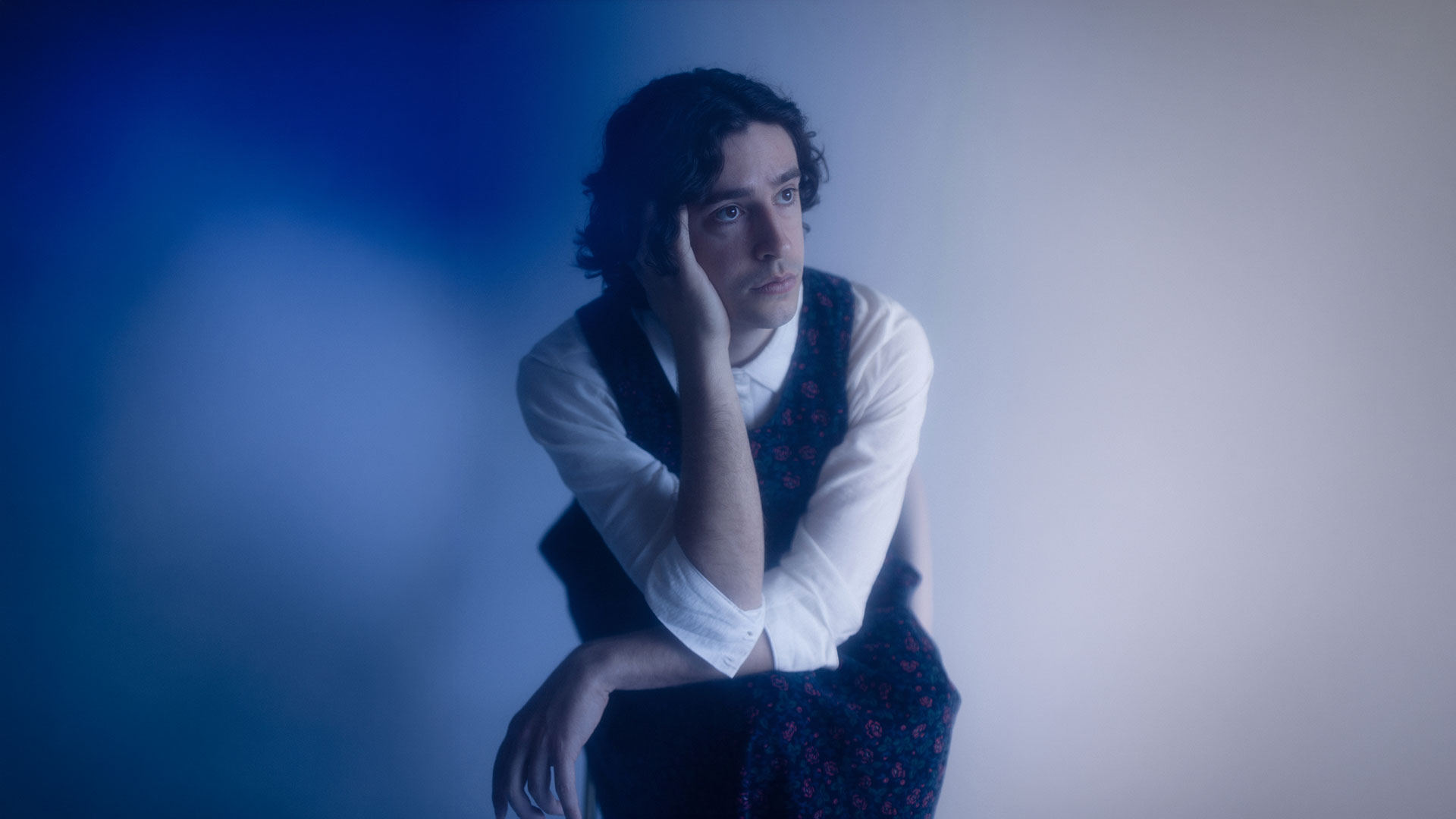
Edie Yvonne began writing songs at thirteen in Los Angeles after years of musical theater and short films, including the lead role in Chloë Sevigny’s Kitty. The early singles and the Girl Code EP carried a brighter teen-pop charge. Later tracks such as Look Me in the Eye and Nightmare pulled the sound toward something leaner and more exposed. On Dial continues that turn. Written from a personal loss and recorded with longtime collaborator Nicky Swedin on guitar, the song sits inside the second EP Look Me in the Eye as a direct account of what remains after someone leaves.
Think of the rotary telephone dial. You lift the receiver, place a finger in the hole, and turn with deliberate pressure. The mechanism clicks, then the dial springs back to rest. If the person on the other end does not answer, the only sound left is the return of that dial and the silence that follows. The gesture of reaching out resets itself every time. Edie Yvonne’s On Dial lives inside that gesture. “I got all my fears on dial / Don’t ask them to speak, we’ll be here a while,” she sings, and the fears sit there like a number she knows by heart, one turn away and ready to talk for hours, while the one who ran away stays out of reach.
The first verse already holds the whole story. “I stop whenever I see you / It’s hard to look when you’re near / ’Cause I wouldn’t want to be you / So when I’m alone, break my mirror.” The resemblance is the problem. Whatever this person carries, she refuses to carry it, and the glass that keeps showing it to her is the first thing to go. Then the wait arrives, and it cuts both ways: “And I’m waiting for you to save me / And it’s making me kind of crazy / And I hate to wait here / Even more than I hate when you appear.” She waits to be rescued by the same person whose face she cannot bear to meet, and the song holds that knot without untying it.
The arrangement keeps the same pressure. Acoustic guitar chords sit warm and slightly unstable at the start. A measured drum pattern and solid bass enter underneath, marking the slow accumulation of hours rather than any forward motion. When the waiting sharpens, electric guitars layer into a dense wall that fills the room without resolving it. The sound does not explode for drama. It thickens the air so the emptiness has weight. Then it pulls away again, leaving open space where the next line can land. Swedin’s guitar work, refined across five years of collaboration, gives the lyrics room without cushioning them.
The first chorus ends on a habit. “Don’t feel the need to ask if it’s alright / No, I never ask, I just close my eyes / Closing my eyes.” The voice drops to a near-whisper on that last phrase, close and unsteady, almost private. The second verse says where the habit comes from. “An endless runaway, wounded by his father / And since you’ve run away, I’m a wounded daughter / And no, I never wanted to be you / But in my reflection, I see you.” Two generations fit in two lines. The hurt passes from father to son to daughter, and the mirror of the first verse finally shows whose face it is. Then the damage splits into two rooms: “And I get lost in all my sorrows / And you get lost in a bottle / And we’ll both forget by tomorrow / Just to find another emptiness to borrow.”
After that the chorus changes owner. “I got all your fears on dial / They’re locked in my mind, they’ve been here a while / Don’t even ask if it’s alright / No you never asked, you just closed your eyes.” In the first chorus the fears were hers; now they are his, kept in her head, and the closed eyes she sang about as her own way of coping turn out to be his first. One pronoun moves and the inheritance is out in the open. The bridge stretches the words until they almost come loose: “Closing, closing, closing my eyes / While you’re leaving, leaving, leaving me behind / And we’re letting, letting, letting time pass by / And your memory is slipping through my mind.” When the melody climbs, the voice roughens into something more exposed, still controlled, still asking the question nobody answers.
Near the end the instruments cut out for brief, precise seconds and leave the voice uncovered on its own hesitation, with no wall of guitar to carry the note. The last chorus holds the hardest line in the song: “I got all my fears on dial / They won’t disappear for a while / I try to let them free when my thoughts run wild / But they run back to me, something I wish you tried.” Her fears do the one thing she wanted from him: they come back. Then the last arpeggio of acoustic guitar fades, and the dial springs back to rest.
On Dial stays with a very specific condition: waiting for and refusing the same person, seeing him in the mirror, catching his habits in her own. The song keeps the fears from speaking while knowing they will call again, and its clarity comes from that restraint. The arrangement supports the weight without decorating it. The voice carries the facts of the situation with enough presence that the silence after the final chord still feels occupied.